Reviewing Yanis Varoufakis: “Techno-Feudalism: What Killed Capitalism?”
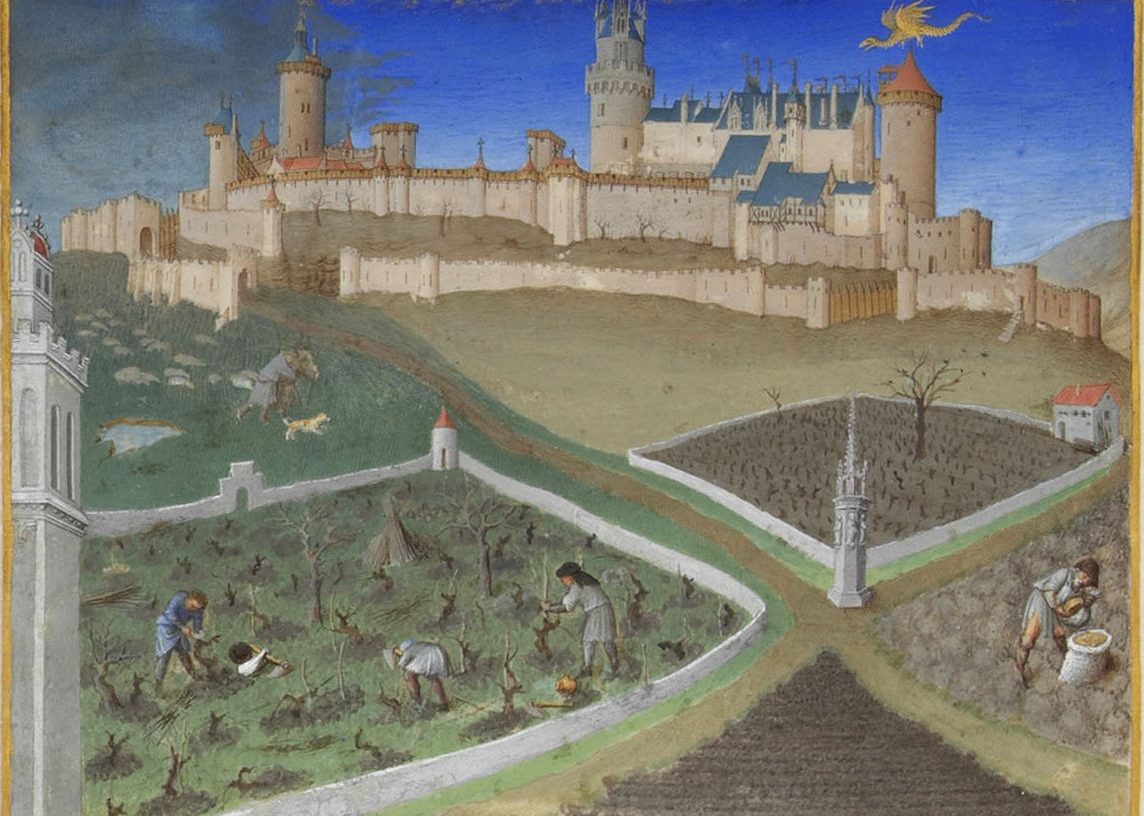
Communication sciences researcher Mert Demir examines Yanis Varoufakis’s highly debated book Techno-Feudalism: What Killed Capitalism? He explains the structural shift from traditional market economies to a new digital paradigm. Exploring the rise of cloud capital, algorithm-driven platforms, and our modern roles as “cloud serfs,” Demir connects Varoufakis’s economic framework to Byung-Chul Han’s concept of psychopolitics.
Elif Başlantı: Welcome. Could you introduce yourself?
Mert Demir: Hello, thank you very much. I am Mert Demir, a research assistant at Istanbul Beykent University. I am also pursuing a Ph.D. in Communication Sciences at Marmara University, where I am currently writing my thesis. My main research interests lie in the sociology of communication.
E.B: In our seventh issue, we focused on Techno-Feudalism as the main theme. Can you share insights about the book Techno-Feudalism: What Killed Capitalism?, a key work that introduced this idea and established its theoretical basis?
M.D: Yanis Varoufakis highlights that as digitalization, the platform economy, artificial intelligence, automation, and especially algorithms evolve, they are reshaping existing production relations. Collectively, these elements are forming a new type of production system that exists outside the traditional capitalist framework.
E.B: A key strength of the book is its narrative, centered on a father-son dialogue, employing language that is informal and relatable. As a reader, what are your impressions of the book’s tone and storytelling style?
M.D: Varoufakis approaches this book not as an academic work but as a conversational response to an old discussion with his father. This simple, accessible style is consistent with his other writings on capitalism and related topics. He enjoys explaining complex ideas in a way that the public can understand, which we might call popular science or accessible writing. His skill in this area contributes to the book’s popularity, as it is written in a way that anyone can read and grasp. I find this valuable because if it had been written in an academic tone, its impact would likely have been less. Though others have addressed similar ideas before, this book is especially notable for its successful popularization of those concepts. Overall, it is a highly impactful book in terms of popularity.
E.B: This book isn’t primarily focused on solving problems; rather, it contributes new ideas to the literature. For instance, it introduces novel class categories like cloudalists alongside the traditional capitalist bourgeoisie, and cloud proletarians alongside ordinary proletarians. You noted that the book is somewhat detached from existing literature. Does it provide a strong conceptual framework to justify this observation?
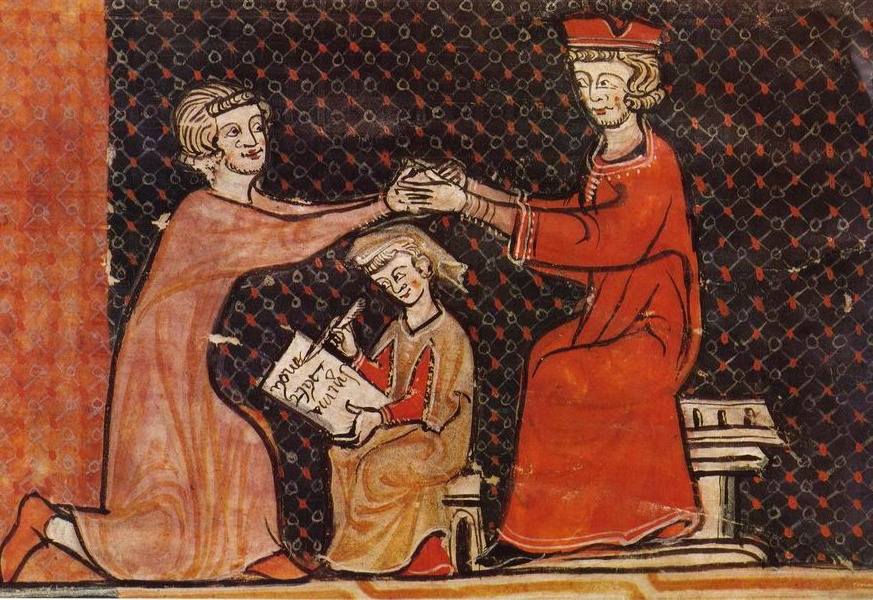
M.D: The explanation largely matches existing literature, though his style and structure differ from our usual expectations. Before diving deeper, we should clarify Varoufakis’s perspective on this capitalist transformation. How does he describe this shift? How does he frame it? Let’s explore that. The concept of Techno-Feudalism is rooted in scholarly work, and Varoufakis highlights lesser-known aspects, making the idea more accessible. His main point is that our traditional capitalism has been replaced by a new system what he calls Techno-Feudalism because communication technologies now operate outside the traditional market mechanisms. Historically, feudal economies were land-based; with land owned by feudal lords, vassals in the middle, and peasants at the bottom. Feudalism centered on landownership, with lords owning the land and vassals paying rent or dues. Peasants worked the land within this hierarchy. This system shifted with the advent of modern capitalism, which replaced feudalism with an industrial economy. Capitalist ideology promoted the idea that capital and commodities could circulate freely, emphasizing the importance of commodities and money. This promise was that capital could move without restrictions, underpinning the focus on individual capitalists, and aligning with liberal economic principles. However, while capital was viewed as free to move, the free movement of labor was rarely acknowledged.
“Varoufakis emphasizes that, although the old ideal was perfect, the system once operated within its own limits. Today, this is no longer possible because the free market has been replaced by something entirely different.”
Varoufakis emphasizes that, although the old ideal was perfect, the system once operated within its own limits. Today, this is no longer possible because the free market has been replaced by something entirely different. Previously, anyone could enter the market and interact as buyers and sellers, consumers and producers. Now, markets are often virtual spaces controlled by techno-lords, who own these digital platforms and open them to vassals. These vassals connect with consumers on these platforms, forming a three-tier system: techno-lords, dependent capitalists (vassals), and free data laborers (cloud serfs). They transfer resources freely, often unconsciously, with people working in major tech companies referred to as cloud proletarians. The traditional concepts of producer, consumer, capital, and labor evolve into a four-layered structure in TechnoFeudalism, which governs the system based on these frameworks.
E.B: Thank you for your thorough explanations. I now see that techno-feudalism marks the beginning of a significantly more difficult era. Currently, on social media platforms run by giants such as the Magnificent Seven, we tend to blame ourselves for setbacks or failures rather than the system’s creators. What is the source of this manipulation we face, and what steps can we take to overcome it?
M.D: Today, we are far removed from the traditional feudal system, having passed through centuries of change. Capitalism has since developed into its current form, with some critics arguing that it has evolved into a different structure altogether. Nonetheless, Varoufakis contends that capitalism is essentially dead and suggests it is causing its own demise, often unintentionally. Although this view has its critics, we now live in a world distinct from feudalism, where capitalism has taken hold. Varoufakis illustrates this shift by comparing the old feudal system with modern capitalism, explaining why he claims, “Capitalism is dead.” He clarifies that classical capitalism relied on industrial capital, factories, machinery, and the means of production, generating profits from tangible outputs. In contrast, the rise of Techno-Feudalism introduced “cloud capital,” driven by A.I., algorithms, and digital infrastructure that influence behavior. Market dynamics are crucial here. Historically, capital moved freely, with markets largely self-regulating without government interference, though in practice regulatory bodies played a role. This ideal of a self-regulating market dates back to Adam Smith, with the metaphor of the invisible hand suggesting prices formed naturally through supply and demand, balancing producers and consumers.
A key aspect here was also the presence of free competition, meaning market players could compete openly. However, it’s important to recognize that this scenario assumes an idealized system. In the Techno-Feudal system, the rules are dictated directly by the technology lord, who employs algorithms to control them. As a result, true competition is diminished. In a free market, producers and consumers interact in an open space, but in today’s algorithm-driven markets, the platforms themselves can vary. Even on the same platform, algorithms may show different content, eroding the concept of free competition. Instead, interactions occur within a pre-defi ned environment. Economically and in terms of profit, maintaining a balance between producers and consumers is essential for the system’s functioning.
The main factor is profit. Capital’s primary goal is to accumulate more capital. In classical capitalism, profit derives from goods and services through the mechanism of surplus value. But in the Techno-Feudal model, each actor on digital land is taxed; Varoufakis describes this as feudal tax, commission, or rent income. Traditionally, market actors do this voluntarily. Here, I speak ideally, but to access cloud services, everyone must pay a fee to the cloud or feudal lords. The entire system operates on this structure. Unlike the classical system, where the aim was to maximize capital through reinvestment in innovation and development, the era of techno-lords does not require such reinvestment. They also need to innovate and develop new technology, while facing competition in that area. Varoufakis argues that, traditionally, the return on investment in money generates a certain level of employment, which is true. However, in the economy shaped by techno-elites, employment becomes less central than in the traditional system. This is evident in comparing the number of workers in a factory to those in a tech company: since technology drives the process, fewer employees are needed. These companies can manage operations internally, and the fact that money isn’t circulating back into the market poses additional issues. Notably, tech giants often make significant moves during times of crisis. Varoufakis highlights this, especially citing the 2008 crisis and the subsequent pandemic period.
During economic crises, market demand always declines. As demand drops, production decreases, and traditionally, these two are interconnected. However, the focus shifts toward technological applications accessed via computers or phones. A clear example is the pandemic: people couldn’t go out, the economy suffered, and employment dropped. Meanwhile, tech companies made significant investments to reach and engage users and succeeded. Varoufakis views these actions as crucial steps in the emergence of Techno-Feudalism. Understanding these developments is vital to grasping the larger issue. In his book, he highlights these trends during 2008 and the pandemic period.
“Every like, comment, or minor interaction feeds the algorithm, contributing free labor to the tech lord’s property. It’s important to recognize that serfs hold a significant role here what once involved coercion is now voluntary service.”
During economic crises, market demand always declines. As demand drops, production decreases, and traditionally, these two are interconnected. However, the focus shifts toward technological applications accessed via computers or phones. A clear example is the pandemic: people couldn’t go out, the economy suffered, and employment dropped. Meanwhile, tech companies made significant investments to reach and engage users and succeeded. Varoufakis views these actions as crucial steps in the emergence of Techno-Feudalism. Understanding these developments is vital to grasping the larger issue. In his book, he highlights these trends during 2008 and the pandemic period.
E.B: Professor, just as those who control the means of production in the past were able to generate the greatest profits and influence society, today anyone wanting to do e-commerce is forced to use the platforms operated by these lords. Building a new system from scratch requires a huge amount of capital, so both producers and consumers become dependent on these platforms, and the taxes or profit shares you mentioned are again earned by them. Is there a way to find a solution or an alternative to this? What can we do in the future?
M.D: Initially, for this system to work, it must include four classes or strata as defined by Varoufakis: techno-lords, vassals, cloud serfs, and cloud proletarians. At the start, we identified techno-lords, followed by vassals, cloud serfs, and cloud proletarians. Cloud serfs are crucial because the system’s persistence relies on consumers. No system can operate solely through production; it must also generate profit, which involves both sellers and consumers.
Thus, cloud serfs can be viewed as free data laborers. Social media users, ordinary people producing data online, are essentially cloud serfs, often unaware of it. Everything we do -whether engaging with an app or simply remaining inactive- sustains the system. Including cloud serfs, ensuring their satisfaction, and fostering their identification with this space are vital to the system’s operation. Cloud proletarians are salaried workers for major tech firms, but cloud serfs don’t receive salaries or contracts; instead, they form a vast crowd. When everyone on Earth uses their phones and opens an app, they participate in this system. Every like, comment, or minor interaction feeds the algorithm, contributing free labor to the tech lord’s property. It’s important to recognize that serfs hold a significant role here: What once involved coercion is now voluntary service.
E.B: Sir, historically, people worked under lords for financial gain, which brought tangible benefits. Today, even on social media, we work mostly for others’ profit, effectively making us unpaid workers. From this view, the outlook appears even more bleak, doesn’t it?
M.D: Exactly. The core issue here is free labor. Exploitation has long existed in traditional capitalism. Traditionally, it was thought to occur in specific factories and production centers, but nowadays, since everyone participates in the system, the scope of exploitation has broadened. This means we can speak of universal exploitation. For example, even a small child using apps is exploited in some way within this system, contributing to it. We all serve the same purpose. In literature, concepts such as free labor, emotional labor, and platform capitalism are often discussed. Perhaps because Techno-Feudalism integrates all these ideas within a framework, it has become very popular. It offers a way to interpret and analyze all these phenomena.
E.B: Varoufakis offers a solid diagnosis of the situation. But has he proposed a solution? Should we see this work as a manifesto, and does it have the power to motivate and inspire practical change in us?
M.D: It depends on your perspective. Varoufakis simply states an observation based on his own experience. We can argue that their proposed alternatives, when added to this narrative, are lacking. He discusses well-known topics and questions whether it is possible to develop alternative approaches, like further democratizing the system. However, it does not appear that he presents a more thorough or specific alternative.
E.B: You have a work on psychopolitics. How did reading this book impact your work? Since these ideas are linked to Byung-Chul Han, did Varoufakis’s arguments alter your perspective on the topic, or were there aspects with which you entirely disagreed?
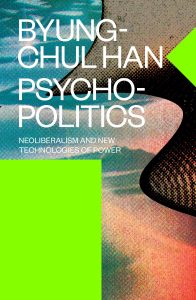 M.D: Varoufakis proposes a system concept and analyzes it structurally and from an economic policy perspective. However, for the system to operate, it also requires agents who act as its main supporters, since systems are not solely composed of structures. This led me to consider whether Techno-Feudalism could be approached through Byung-Chul Han’s lens, prompting me to write a related paper. I found they significantly influence each other; although Han doesn’t explicitly mention “Techno-Feudalism,” his description of the economic system overlaps with Varoufakis’s. Han views this as a form of neoliberalism, a regime emphasizing voluntary self-exploitation. Essentially, he argues that contemporary governance is fundamentally psychopolitical. To clarify, psychopolitics draws from biopolitics and can be seen as its modern evolution. In traditional feudal systems, biopolitics was present, and it persisted until the advent of Techno-Feudalism within capitalism. Although I use the past tense, this dynamic still exists today. However, today there is an additional element: psychopolitics. In fact, while there was coercion over the body in the past, today it extends to the soul, directly to human reactions, thoughts, and feelings. And today, these can be directed through algorithms. Tendencies are being decided by algorithms.
While biopolitics focuses on biological aspects, psychopolitics addresses the soul and mental processes. Its main purpose is to optimize mental and emotional functioning, unlike biopolitics, which aims to overcome bodily resistance for efficiency. When we join the system, we often do so voluntarily, exposing ourselves to self-exploitation. In classical capitalism, participation was not always voluntary, but today, we engage in these platforms willingly, leading to a natural shift in power dynamics. Unlike repressive systems, psychopolitical power is subtler, friendlier, and more tolerant, replacing coercion with positivity. Han refers to this as a “positivity society,” where constantly projecting positivity, appearing good, and sharing the best moments are common. Psychopolitics relies on these positive stimuli to encourage voluntary submission through an appealing narrative. Previously, gatherings and communication among people were seen as a threat to capital interests, but today, the core motivation of Techno-Feudalism is to promote instant sharing, interaction, and engagement through comments and likes. Han describes this as a process driven by voluntary, passionate participation.
“To clarify, psychopolitics draws from biopolitics and can be seen as its modern evolution. In traditional feudal systems, biopolitics was present, and it persisted until the advent of Techno-Feudalism within capitalism.”
The focus of exploitation has shifted to the soul itself, with individuals expected to become entrepreneurs of their own lives. They embed themselves into the system as entrepreneurs, all under the false sense of freedom. Inner domination bonds are internalized, leading individuals to fight themselves. Han argues that, unlike the class struggle in traditional capitalism, this internal conflict fosters superficial socialization. As people grow isolated, they fall into an illusion of social connection via virtual environments, experiencing exploitation that affects their very soul, leading to total subjugation. Not only are bodies and labor exploited, but humans also begin to self-exploit, with free will gradually diminishing within this false freedom. This aligns with Varoufakis’s concept of techno-feudalism, enriching the understanding of psychopolitics.
First, internalized domination is discussed. Varoufakis describes a production model that influences participation and user experience through internal mechanisms rather than external coercion. Returning to Han, he adds to this by introducing voluntary subjectification, highlighting that psychopolitics and Techno-Feudalism create a more individual-centered, subjective framework. The production of data and the soul is also involved; in Han’s view, data directly relates to managing emotions and desires, while for Varoufakis, data serves as a key source of new economic rent. These approaches together show that digital capitalism sources, both spiritual experiences and economic value from data. Consequently, data plays a crucial role in this post-neoliberal system.
While Varoufakis claims techno-feudalism exceeds capitalism, Han characterizes this state as neoliberal. However, Han’s focus on performance, data, subjectification, and digital surveillance aligns entirely with techno-feudalism and indicates that psychopolitics defines a post-neoliberal era. The emotional economy becomes prominent here; Han’s concept of the positivity society where individuals constantly perform, produce, and seek approval complements Varoufakis’s notion of the serf as a user driven by emotional needs. The desire for approval and sharing actions serve as mechanisms for generating data and loyalty within the techno-feudal system. Therefore, considering both together offers a complementary framework for understanding the subject’s participation and share in techno-feudalism.
“Varoufakis argues that capitalism is dead, but I believe we are still within capitalism, perhaps in a transformed form. The core issues of critical capitalism theory -such as the forces and relations of production and the relationship between capital and labor-remain unresolved.”
E.B: Lastly, is there anything you would like to say about this book? Does the book provide the conceptual tools enthusiasts need to analyze contemporary social relations? What alternatives could be suggested? Would you recommend the book as a reader?
M.D: I believe this is a must-read book. It’s engaging, accessible, and can alter our view of current social processes. Discussing alternatives is more complex. Of course, there are options, why conduct these studies if there’s no hope? Still, this remains an ongoing journey. For example, Varoufakis argues that capitalism is dead, but I believe we are still within capitalism, perhaps in a transformed form. The core issues of critical capitalism theory -such as the forces and relations of production and the relationship between capital and labor-remain unresolved.
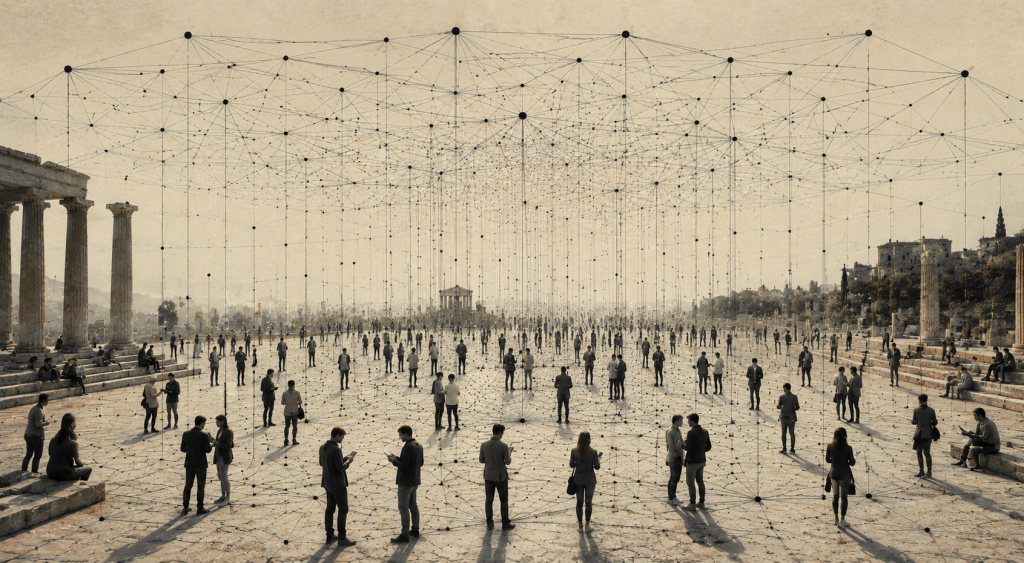
Many share this view. That’s why I see Techno-Feudalism, like neo-liberalism, as not post-capitalist but part of capitalism. There are certainly alternative paths and methods, all part of the struggle. To explore these, we must ask, “Can we establish a more democratic internet, digital space, or economy?” and examine efforts toward that goal. Varoufakis notes that progress has largely been achieved through algorithmically driven free markets in which producers and consumers interact. But if we see these spaces as akin to the markets and agoras of ancient Greece public places where people gather the scope becomes more political and social. All these processes influence each other. Yet, when public discussion is mediated by algorithms, a different reality emerges. Considering these two dynamics together reveals a more troubling picture, as it undermines the ideal of free public discourse. Alternatives do exist and should be explored. However, this book doesn’t offer a convincing solution. Still, I believe it’s essential reading for anyone interested.
E.B: Thank you very much for your honest explanation and for sharing your insights with us. We’re pleased to have had you as our guest.
M.D: You’re welcome.
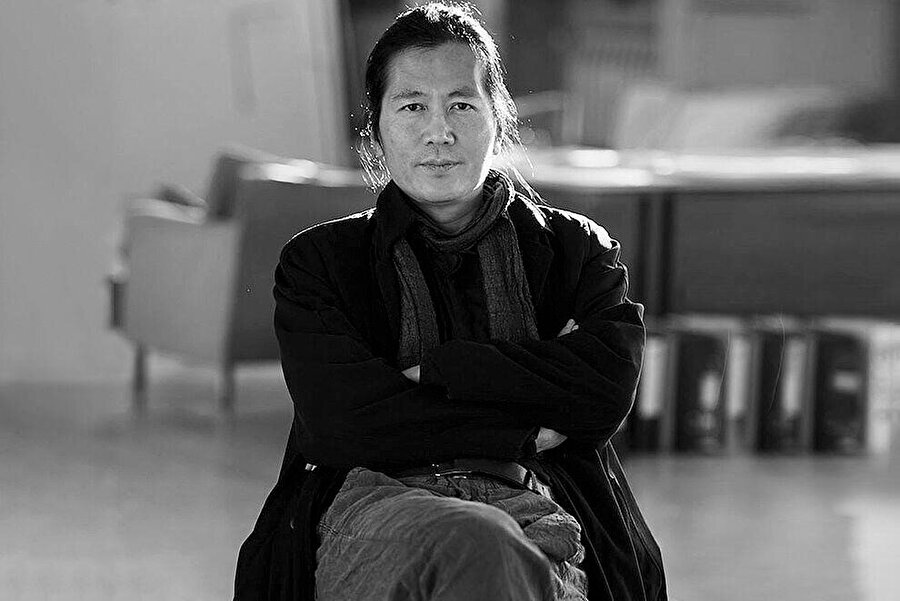
Byung-Chul Han
Son İçerikler