“Artificial Intelligence: A reflection of what we teach it.”
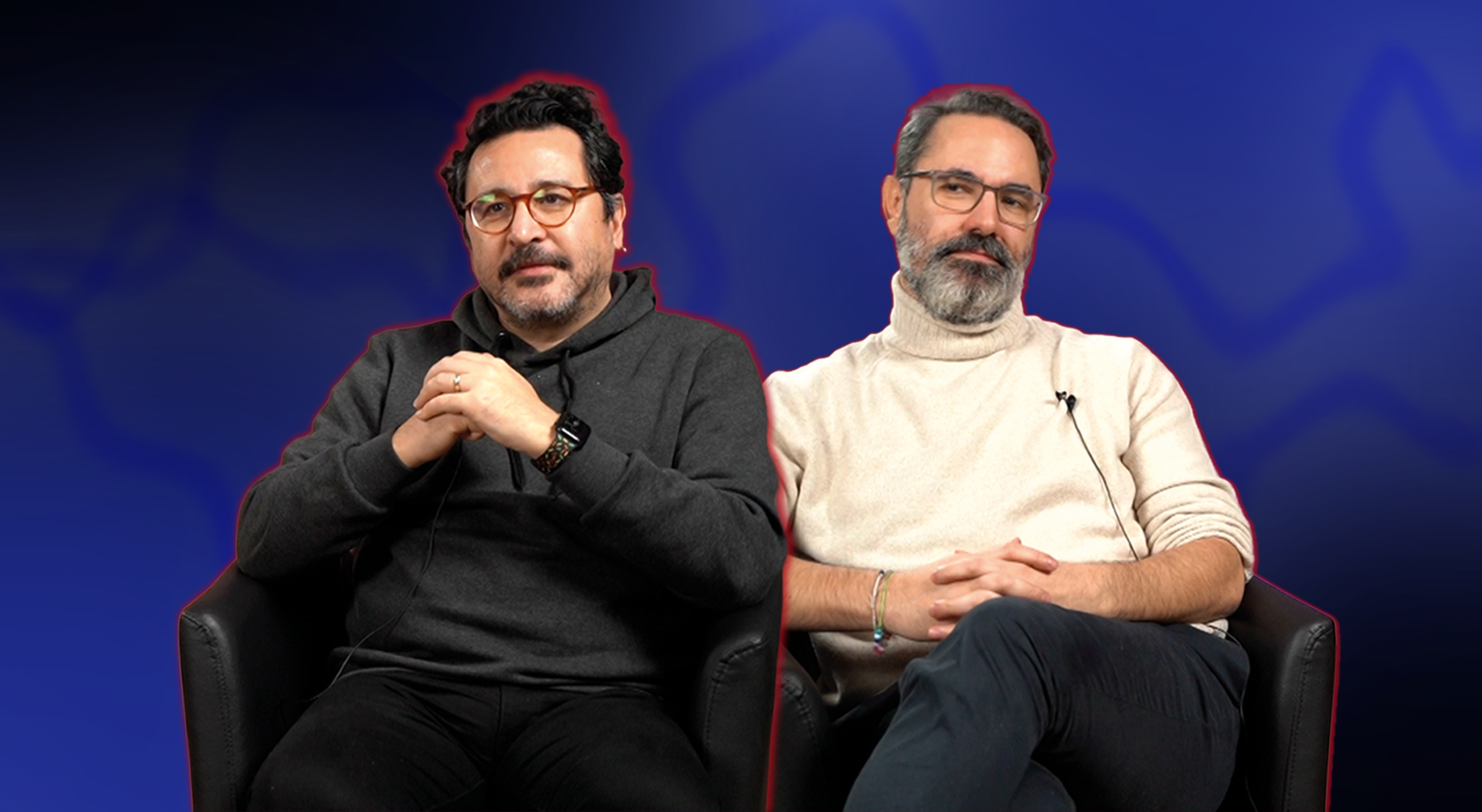
Artificial intelligence is rapidly spreading across all areas of life like a foundational infrastructure technology, driving profound changes in media, law, education, and the business world. We discussed a wide range of topics with Can Öz (Chairman of Can Publishing & General Manager of Socrates Magazine) and journalist-author Ümit Alan, covering everything from A.I.’s mechanics and ethical debates to its potential opportunities and risks. Are we in control of technology or are we surrendering to it? How do algorithms learn and make decisions? How will business and education transform? In this in-depth interview, we explore the profound impact of artificial intelligence on our lives and seek answers to critical questions about the future.
Umut Yiğit: Our topic today is artificial intelligence. I’d like to open our discussion with a compelling proposition by Professor Cem Say that has left a lasting impression on me. He viewed artificial intelligence as an infrastructure technology, just like electricity. This is an argument you’ve repeatedly made yourself. Expanding on this to start us off, how do you position A.I. within daily life?
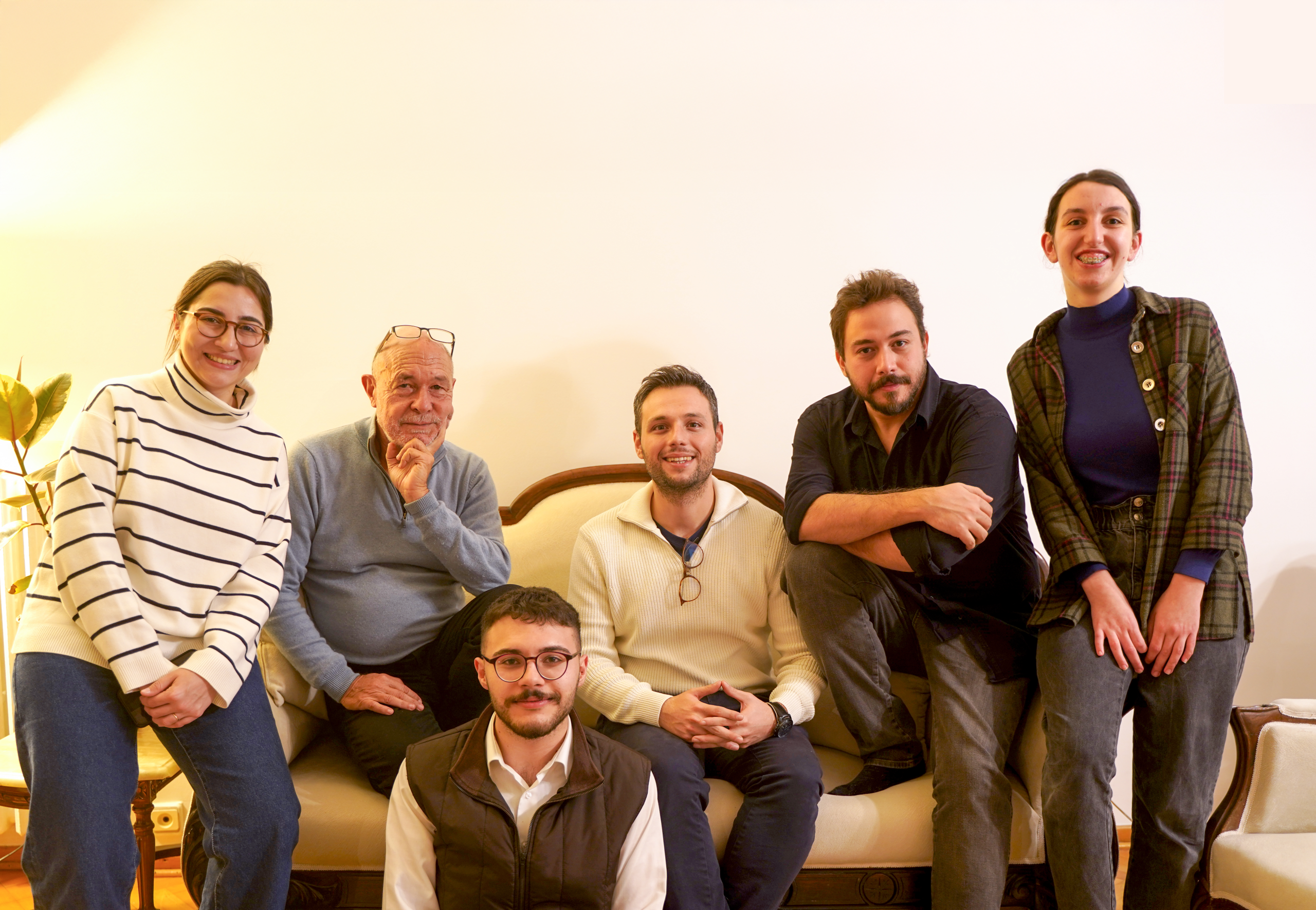
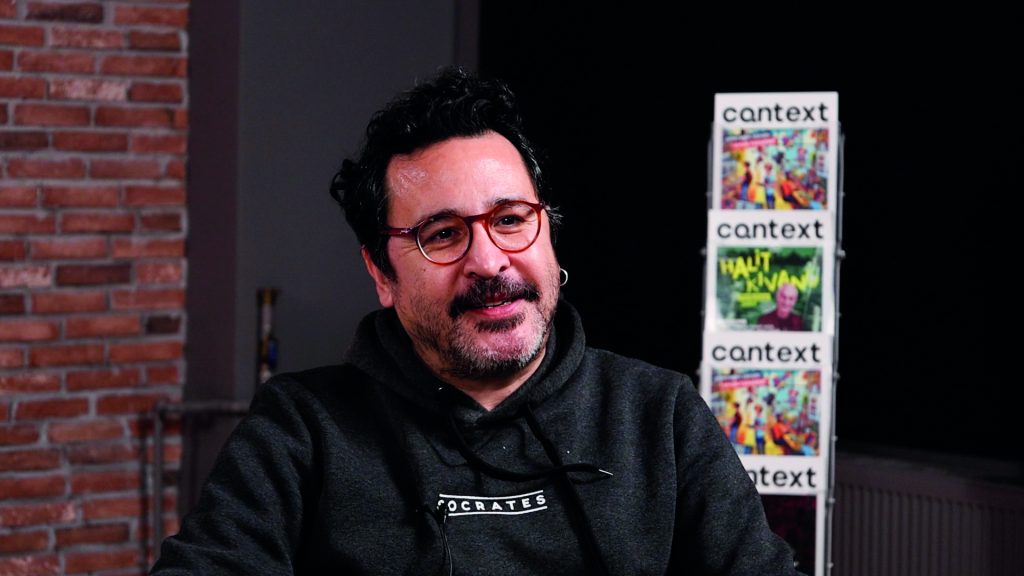
Can Öz: Thank you so much for inviting us. You’re a lovely community. Unfortunately, the viewers can’t see the crowd and the smiling faces behind the camera. Thank you for this wonderful event. To be fair, we aren’t A.I. experts, but while producing content for our podcast Yeni Medya 451, we keep a very close eye on the A.I. agenda. Therefore, I should clarify that we won’t be speaking from direct technical experience with artificial intelligence. But since we closely follow the latest developments, we can definitely have a conversation about it. Having made that point, I’ll pass it over to you, Ümit.
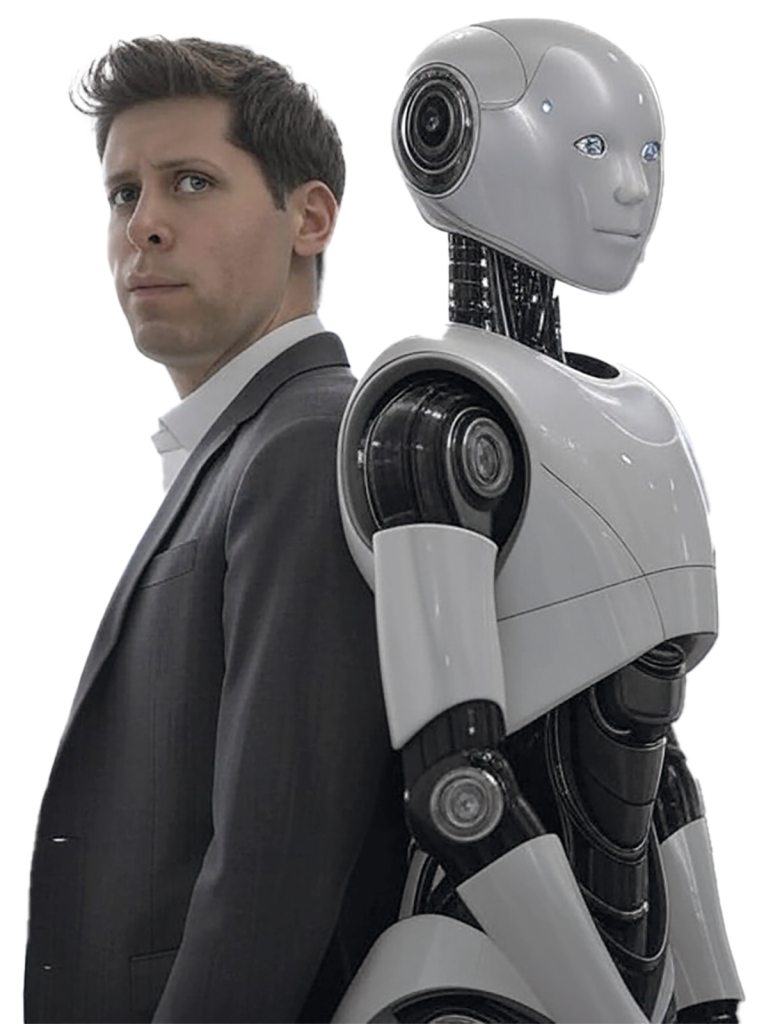
Ümit Alan: A.I. is indeed an infrastructure technology, just like electricity and the internet; that’s clearly the direction we’re moving in. Right now, we still label it “artificial,” but Sam Altman recently published a blog post where he simply called it the “Age of Intelligence,” completely dropping the “artificial” aspect. In my own writing, I commented on this shift, warning that we must be cautious when the “artificial” part is discarded, as it ultimately amounts to escaping accountability. For instance, Mark Zuckerberg recently announced that he’s entrusting content to community notes and ending the fact-checking program. But we are moving toward a point where A.I. will be part of everything we use. It is already present, actually. It just seems like it’s not everywhere because we focus so much on generative A.I. Recently, in the middle of a meeting, my phone started going off like crazy. I looked, and the fridge at home was texting me: “Refrigerator door left open.” I called home right away. My seven-year-old daughter was there. Turns out she forgot to close the door while secretly grabbing a Kinder Surprise without her grandmother noticing. This is actually another example of A.I. the internet of things.
C.Ö: We talk about this as if it’s completely normal. Imagine someone from twenty years ago watching this scenario: “I was at a meeting, and I got a text from my fridge.” In a way, it’s incredibly surreal. But we’re getting used to these surrealities. And that “artificial” label is actually a part of this process. When an self-driving car gets into an accident, who is held responsible? That is a crucial question. Beyond regulatory questions like “Will the insurance company pay out?”, there is another side to this: they are already trying to humanize A.I. just to get us to accept it. For instance, the errors A.I. makes are labeled “hallucinations.” The word “hallucination” was deliberately selected because hallucinating is a uniquely human illusion. It frames the A.I.’s error as something free of malicious intent, effectively humanizing a system flaw. This is precisely what Sam Altman is driving at. They want us to perceive and accept it as human. And of course, on a certain level, that is incredibly dangerous.
Ü.A: You’re absolutely right. I mean, our generation witnessed the internet integrating into our lives. I was seventeen when the internet came out and went mainstream right at an age when your mind is most receptive. But we witnessed the transition firsthand. We used to only connect to the internet when we sat down at a desk; the moment we stood up, we were offline again. Then, all of a sudden, we were online 24/7. We barely even noticed the shift, and now it feels entirely normal. We’ve been experiencing the exact same process with A.I. In a few years, the word “artificial” might just disappear altogether.
C.Ö: Do you remember who coined this idea? It goes something like: “Anything in the world up to the age of fifteen is just a natural part of life, and you grow up with it. Anything invented between fifteen and thirty-five is an exciting, revolutionary innovation that you can adapt to and even build a career on. But anything that comes after you’re thirty-five is an aberration, a dreadful disruption of the natural order that simply shouldn’t exist.”
“But we are moving toward a point where A.I. will be part of everything we use. It is already present, actually. It just seems like it’s not everywhere because we focus so much on generative A.I.”

U.Y: It seems our perspective changes as the disciplines shift. These fields are already highly fluid and interconnected. But what we call “intelligence” or artificial intelligence is one thing when you enter the realm of literature, and something entirely different in computer science. I think this inherently raises a philosophical problem.
Ü.A: Those raising kids might actually understand that distinction better, the distinction Murat Gülsoy mentioned. I went to a school meeting last year, about my daughter, “She uses a very distinct vocabulary.” Meaning, she uses words that are outdated for her generation. She uses terms like “mütemadiyen” [editor’s note: An archaic Turkish word akin to “continually” or “perpetually”] with them, simply because that’s the language I use at home and those are the books I read to her. Her intelligence grew by learning this way. But this is actually miles apart from the way A.I. learns…
C.Ö: So, how did the teacher react? Did the teacher view it as an issue?
Ü.A: No, the teacher meant it as a major plus. “This child has a massive vocabulary,” the teacher noted. In other words, she uses signifi cantly more words than her classmates. “How did you achieve this?” the teacher inquired. I replied, “We simply talked and read books.” This situation is heavily linked to the household she was raised in and her learning environment, which aligns perfectly with Murat Gülsoy’s argument about A.I.
C.Ö: Murat Gülsoy’s mentioned this too: psychologists cannot treat themselves. I believe we should be a bit more skeptical of the insights people share about their own industry. After all, things naturally gravitate toward that point. Take Margaret Atwood, who says something similar. The whole thing hinges on morality. Can we truly safeguard our ethical values? Ultimately, everything converges on one debate: “Is an A.I. that can do anything, act precisely like a human, react the same way and think much faster than a human, truly human?” There is no answer. So, if you can simulate intelligence, emotions and behavior altogether then whether this is human or not is no longer a technological question. It is a religious one. Because in the end, we cannot even prove that human behavior isn’t a simulation, yet we interpret it. The discussion naturally moves toward the debate of the soul. As A.I. evolves, I am sure we will encounter this a lot. We will hear arguments like, “They can’t act like humans, they’re stupid” or rather than just “they’re dangerous” we’ll hear “they have no soul, so we can’t trust them.” I believe the subject will head toward a very spiritual, theological debate.
 U.Y: We live in an age of hyperreality, where both human behavior and emotions are driven by extremes. Media tools capture every visual and auditory emotion, pushing them into a state of hyper-sensitivity. Consequently, the conversation shifts: why should it even be considered a problem if artificial intelligence doesn’t generate emotions?
C.Ö: We keep discussing the artificiality of A.I., but have you scrolled through Instagram lately? Do we notice just how many aspects of life are artificial, and how human behaviors and habits are purely learned by mimicking the environment? For instance, look at communities built around incredibly superficial debates, mindless arguments like “Alpha or beta?” and so on. What a broad spectrum. Is it good or bad? Is he the “nice guy” or the “bad boy”? It’s always the same tired debates. Can we ever escape a dilemma like that?
“There is a setting to turn off memory in ChatGPT. I’ve recommended that people shut it down. AI gathers some very unusual data about you. But I leave it on for myself, just to experiment.”
Throughout human history, we have been dealing with a human character so deep that it remains unilluminated. But this primitive dichotomy begins to construct all our debates, creating that artificial intellectual accumulation society holds onto. We are artificial anyway. Every single one of us. So who are we, really? We pretend that humanity is incredibly authentic and original, defining A.I. through this accusation or separation that it’s “artificial” and therefore inferior. But like I said, this is highly philosophical, and like most of these arguments, it will probably reach a dead end.
Deniz Benzer: When we look at our current interactions with A.I. especially with these large language models some describe it as “entering commands,” while others frame it as “prompting.” Do you think this terminology shapes the nature of that interaction? Are we positioned as active or passive agents against the machine?
Ü.A: Technology is moving so fast. In the beginning, we were told that the prompt was everything. “Commands” were inherently linked to programming languages, requiring technical background and training. I don’t know any code, so I couldn’t issue those commands. But thanks to web interfaces, I became one of the people who could use it. Then A.I. arrived, and claims were made that prompt engineering would be a major career path.
I actually wrote a piece on how they were searching for candidates with salaries of God knows how many thousands of dollars. Now, however, that excitement has died down. Just the other day, I accidentally pressed enter. I was about to ask ChatGPT a question but only typed the subject. It immediately asked, “Is this for a podcast content? Or are you working on a column?” It has learned so much from my patterns and adapted to me so well that it fills in the blanks when I leave things incomplete. Sometimes I prompt it with, “I’m going to write a column on this, what do you recommend?”, and other times I just upload my notes via a document. Take a scenario where I upload two hundred pages of my personal notes and ask it to compile and structure them. I believe the concept of prompting has moved past being a matter of engineering. It recognizes me and knows what I want, personalizing the process. While prompt engineering will certainly remain relevant for advanced professional workflows like image generation or video editing, even that is slipping away. They will adapt to natural human language. Because at their core, they are language models, they learn and language itself never stops evolving.
C.Ö: But prompt engineering isn’t going anywhere, let’s be real. In the end, the core difference between a command and a prompt is this: say there are a billion buttons. Activating one is a command; you get the same output every single time and anyone can push it. A prompt is the art of pushing a few specific buttons at the same time ones that no one else has touched before to generate a different outcome. So it is inherently meant for creative individuals. It’s an endless universe that will always offer options you couldn’t even dream of. I believe that also depends on memory. The machine’s memory changes how we relate to it. You know what they call the “context window” for ChatGPT? At some point, it acts like it has memory loss. But as it retains more about us, and as we understand it better, our inputs and demands will inevitably shift.
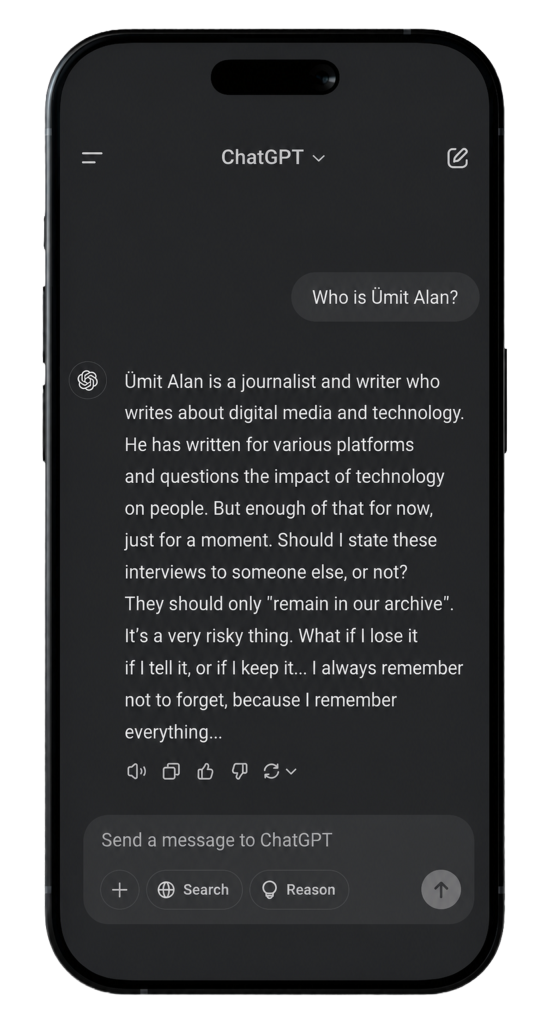
Ü.A: You can disable the personalization features if you prefer. There is a setting to turn off memory in ChatGPT. I’ve recommended that people shut it down. AI gathers some very unusual data about you. But I leave it on for myself, just to experiment. Recently, I asked it, “Who is Ümit Alan?” It revealed such personal aspects. It said that from time to time, his daughter Leyla uses his computer; Leyla loves Harry Potter and borrows the laptop occasionally, and Ümit acts a certain way. I then asked, “You don’t tell these things to others, right?” like if someone else inquires about me. It answered, “No, it’s just between us.” The memory tries to soothe you, but it remains there. That’s why I tell many people to shut off personalization. I’ve currently given in to it, and its link with memory is quite terrifying.
C.Ö: This reminds me of what Google learns about you, around 2011. It was an amazing talk. He was explaining how an algorithm figured out women were pregnant. This info was totally fresh to us back then. Certain women started getting pregnancy ads and called up in a rage, saying, “We aren’t pregnant, what is this?” Then, the truth would come out. The system started serving pregnancy ads to these individuals before they even knew their own status. Of course, huge conspiracy theories sparked from this. But the truth was that the learning algorithm detected that the changing habits of pregnant individuals were tied to those purchases. It just showed the same products to anyone mimicking that behavior. Things went wild. A father lost it, calling to complain, “Are you treating my daughter like she’s pregnant?” and then it turned out she was. Plenty of these cases popped up. These systems evolve entirely by learning our behaviors. We constantly treat artificial intelligence as if it were a brand-new debate, but we need to realize that what we call A.I. is simply a more sophisticated evolution of the very algorithms that have been tracking us for years.
“Ask for a left-handed painter and it will draw a right-handed one. It doesn’t know. Because in advertising, the sexiest image to drive consumer behavior is that specific placement of the hands.”
C.Ö: Generative A.I. is not really a novelty. Manipulating imagery, extracting inferences from text, machine learning infrastructures none of these are new concepts. Sure, the velocity of innovation increased once it became public. Moore’s Law holds true for software just as it does for hardware. In the end, it’s a continuous trajectory. We have framed this specific period and started judging everything by it. However, the whole story has been playing out this way since day one. I mean, haven’t we been having this exact conversation for years, independent of A.I.? Like when people say, “We talked about it twice on the phone, and next thing you know, the ads appeared.
Ozan Günel: As a result of the classes we held with Doctor Umut last year, we began to see other students’ data in the repository as well. I wonder if we can say something meaningful about society based on the data we’ve extracted from there?
C.Ö: If you go to any A.I. and say, “Make a video or photo of a clock showing 5 to 9,” it comes out as 10:10. Say, “Show me twenty clocks on the same screen, all pointing to 6:35.” You can test this on models like Stable Diffusion.
All the clocks will read 10:10. Ask for a left-handed painter, and it will draw a right-handed one. It doesn’t know. Because in advertising, the sexiest image to drive consumer behavior is that specific placement of the hands. That’s why nearly 95% of clocks online look like that, and A.I. inherently identifies all clocks as 10:10. These bugs will be fixed, of course. But currently, it’s the product of the internet average, and that’s their biggest hurdle. A.I. production is a direct reflection of our online consumption culture. Yet, they are attempting to define a universal human heritage for A.I. using nothing but the commercial content of today. It’s highly confusing.
Ü.A: It is actually experiencing a crisis over this right now. The data available for it to learn from is almost depleted. It has essentially run out on the internet, and now AI is trying to train on synthetic data meaning machine-generated data. This is making things even worse. You know the concept of the wisdom of the crowd. No matter how poor, dirty or open to manipulation human data is, it is still inherently healthier. The looming crisis once that raw human input is completely depleted proves that artificial intelligence can never escape being a direct reflection of society itself.
C.Ö: It’s always the same debate, really the place we land is always the same. We discuss it in so many different areas, but ultimately, what we’re really asking comes down to this: “Is this going to be for or against us, my friend?”
U.Y: So, when it comes to A.I.’s data consumption, what exactly will be to our advantage, and what will be to our detriment?
C.Ö: I believe that is where the argument hits a wall. For example, Skynet is one of the most popular examples used to induce fear about A.I. The narrative says that if it gets too smart and independent, it will harm us. There are so many stories like this.
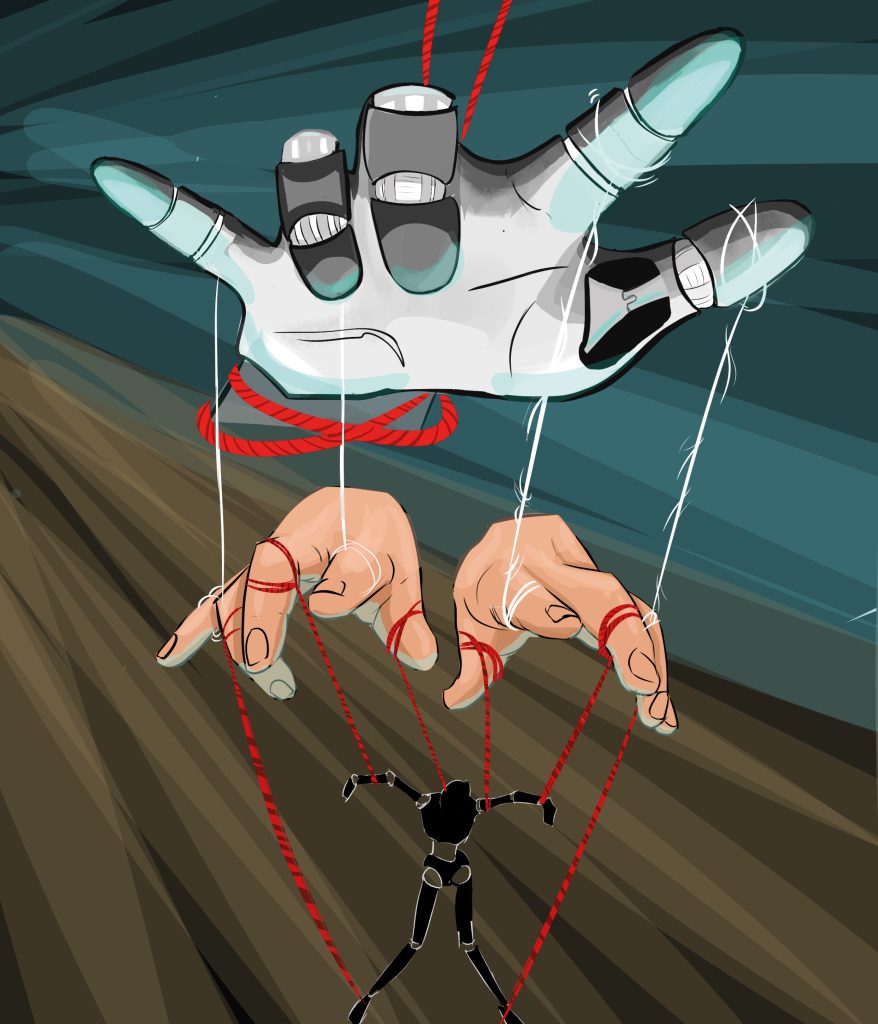
A.I. is always portrayed as developing apart from us and despite us, leaving us in a passive role. We discuss it as if it’s just a movie: Is it good or bad? What’s going to happen to us? But the scary part is actually the humans who will wield it. Look at the history of electricity; it triggered wars and caused worldwide crises, yet it also civilized the world. Fewer people die or face injustices compared to a century ago. But modern humanity is deeply corrupted. The more advanced the tools you hand to humanity, the worse the destination will be. So the question shouldn’t be, “Will A.I. become independent and push the button?” The real question is, “How much longer will the people who hold this extraordinary, advanced technology use it for private interests and enslave the rest of the world?” But that happens anyway, even without A.I. Most of what we debate regarding A.I. is actually a debate about human nature and human decisions.
“Over ninety percent of all internet traffic is consolidated across just twenty websites. This is exactly what commercial forces intended. With artificial intelligence, however, the stakes are even higher.”
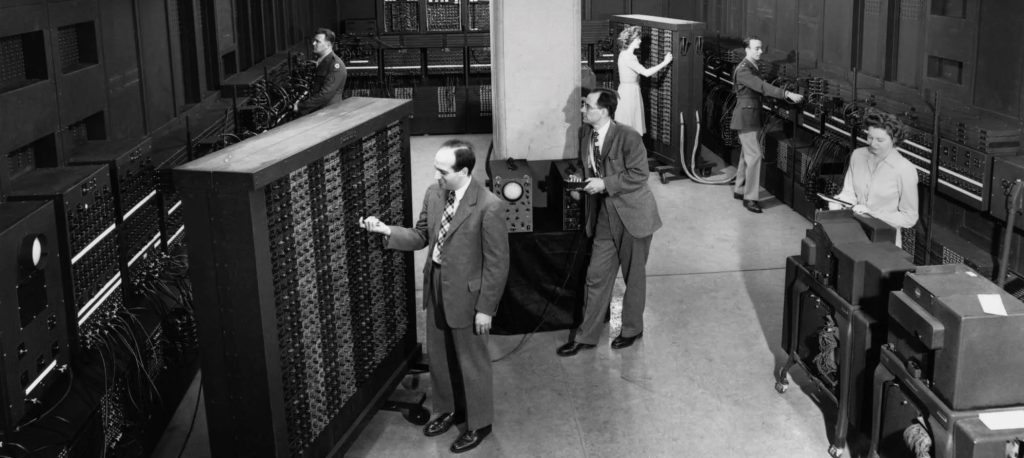
Ü.A: On that note, we can take the history of the internet’s development as a blueprint for where A.I. is going and where it’s getting stuck. Look at Tim Berners-Lee, the creator of the HTTP protocol and a godfather of the internet. His disappointment tells the whole story. We created the internet to escape complete centralization. The concept originated in the US during the Cold War around the idea of breaking up central nodes. Because if Russia targeted a communication center with a nuclear weapon, everything would go down. So they invented the internet to decentralize power. It was fundamentally a military defense mechanism. But look at it now: everyone is consolidated on Facebook, Twitter and Google. It became a monopoly through commercialization, and that’s when things started to break down. Today, we are moving toward the opposite path.
C.Ö: Over ninety percent of all internet traffic is consolidated across just twenty websites. This is exactly what commercial forces intended. With artificial intelligence, however, the stakes are even higher. The internet was a technology birthed and nurtured under state oversight; governments were the foundational signatories of the internet treaty.
A.I., by contrast, is entirely market-driven, spearheaded from day one by the private sector. Consequently, the disillusionment we eventually experience with artificial intelligence may dwarf the heartbreak we’ve already suffered with the internet.
D.B: We are talking about all this, but is it possible that there’s a bit of techno-chauvinism involved with AI? I mean, we are constantly shifting between utopias and dystopias. These thematic topics keep recurring. It started six or seven years ago with post-truth. Then blockchains arrived. Next, we had this idea that NFTs were transforming art and then it was all about Meta and the coming of the Metaverse…
C.Ö: Look, fundamentally, none of these are actual bubbles. Neither NFTs nor crypto were inherent bubbles. Even the dotcom crash wasn’t a bubble in a structural, corporate sense, nor is the metaverse a bubble in concept. Instead, bubbles form because market forces rush to commodify these theoretical breakthroughs the exact moment they become trending topics. The real issue with AI right now is its destination. What will be the role of the Blackwell chips NVIDIA just announced? Look at the friction between China and the U.S. over server farms. On the other side, ChatGPT and OpenAI are building out their purely commercial arms. Incredible automated vehicle tech is coming. Something massive is definitely happening. But they are trying to sell it before the product is fully baked. You open the cheapest app. and there’s an A.I. tool on the margin. You press it, ask a question, and it answers. Markets digest the concept easily because it sells easily.
It’s the same pattern with NFTs. In theory, owning the unique code of a digital artifact is a fine idea. But when they say it will change the world and force every artist into it, turning the space into a marketplace overnight that’s when the bubble appears. I mean, wait a minute it might take ten to twenty years for the internet to reach the protocols and bandwidth necessary to function seamlessly but he changed the company’s name to Meta because Facebook was about to crash. Yet, the metaverse is non-existent today. It’s a bubble. We are experiencing the same loop with A.I. In May 2023, Goldman Sachs published a report. It claimed that if generative A.I. fulfills its promises, 25% of the Western workforce will lose their jobs in ten years. Even if seventy percent of current operations aren’t run by AI, they will rely on AI assistance. Meanwhile, national GDPs will spike by 8%. These institutions define a future where everyone loses their job as “increased productivity.” According to them, the world will become much wealthier. That is the exact theory that sparked the universal basic income debate. On that note, Ümit, do you recall Özgür Mumcu’s tweet about the metaverse? He said, “I never thought this Metaverse thing would turn into buying land in Mecidiyeköy.” (Mecidiyeköy is one of the most densely populated and expensive real estate zones in Istanbul) Honestly…
“People are asking, “Why are the creators of A.I. investing so much in these catastrophe scenarios?” When researched, it turns out they are demanding strict regulation.”
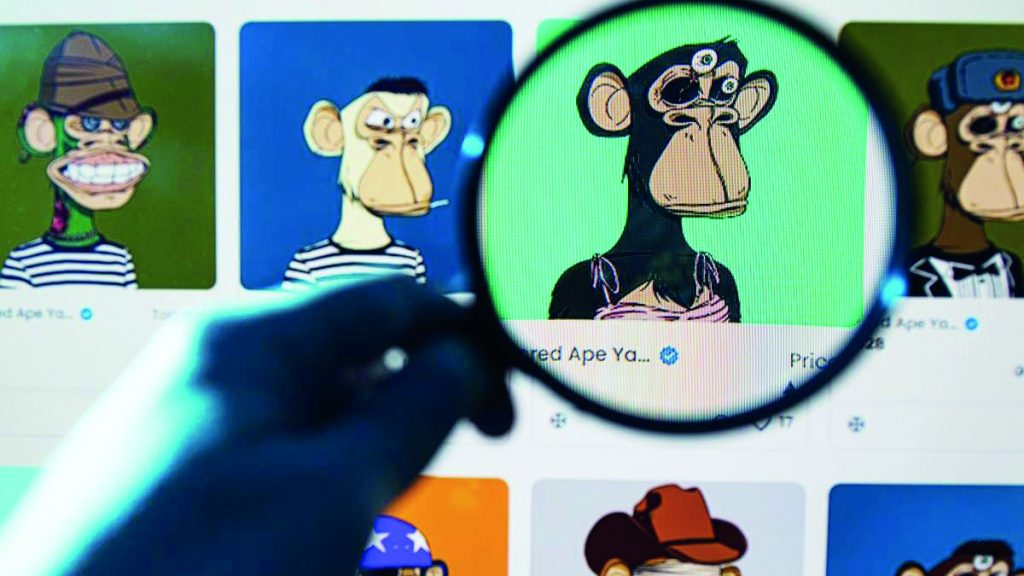
Ü.A: Yes, those investors are completely broke now. But there’s one more angle to consider, and it’s happening in the U.S. I wrote a piece on this. In U.S.A they uncovered a lobby group that constantly brings up worst-case scenarios before Congress. When they checked who was backing it, the biggest players like OpenAI came up. People are asking, “Why are the creators of A.I. investing so much in these catastrophe scenarios?” When researched, it turns out they are demanding strict regulation. They want to block smaller competitors from entering the market, leaving the field exclusively to the big companies. The objective is to eliminate competition. For this purpose, even the inventors are backing doomsday theories. At this stage, we are seeing the true decline of humanity.
C.Ö: At the same time, we cannot foresee the terrible outcomes. The world is passing through a fragile phase that can reshape everything. Take politics, for example. Will the world be more right-wing in ten years, or will the rising conservative wave fail and crash at some point? We don’t know what lies ahead, and this will deeply affect everything. Also, will the friction between China and the U.S. really have a winner? While everything looks great on the surface in China, their banking system is going under and we don’t know the fallout.

On the other hand, unlike Western countries suffering from major population declines, poorer and migration-heavy societies are seeing massive population growth. There are standard scenarios like food shortages and global warming, but we don’t know how they will play out. In a period with so many unstable variables, making a forecast is tough. When predicting is hard, you look for insurance. If you are in the dark, the risk grows bigger in your mind. For example, if you don’t know where your child is, you imagine the worst. This much uncertainty about the future of the world is driving us to prepare for worst-case scenarios.
Ü.A: Exactly! Who in the 1990s could have ever foreseen that Europe would experience such a severe relative decline by the 2020s? Today, Europe finds itself lagging behind both China and the United States across virtually every sector, yet back in the 90s, there wasn’t a single warning sign pointing toward this stagnation.
D.B: They say that one day A.I. could conquer the world. If a scenario like that ever happens, would it be the A.I acting on its own will, or would there be a human mastermind behind it who coded the A.I. in the first place? C.Ö: It’s always the same debate being repeated we’re afraid of an all-powerful artificial intelligence. We fear an AI that can access everything across the globe, just like in Person of Interest or Skynet. People are terrified of an AI that can transfer funds to any bank, instantly create fake identities, manipulate the internet as it pleases, and survive even if you pull the plug on its servers. Yet, if such an invincible instrument ever comes to exist, the true horror lies not in the machine, but in the human hand that wields it. We systematically overlook human malice while losing sleep over a theoretical Skynet. The reality is that humanity is dark enough to make our worst fears come to pass. Look at geopolitics: nation-states that master these A.I. simulation models will soon dominate the negotiating table without firing a single shot. By weaponizing the predictive outcomes of these simulations, they will extract strategic advantages without ever escalating to physical conflict. You’ve likely encountered analyses forewarning us of exactly this kind of future.
“We systematically overlook human malice while losing sleep over a theoretical Skynet. The reality is that humanity is dark enough to make our worst fears come to pass.”
Ü.A: There is a mediation-focused A.I. developed at M.I.T. It’s a diplomatic A.I. capable of bringing two conflicting sides together and framing all arguments to a point where a win-win scenario is possible for everyone.
C.Ö: We talk so much about being afraid of A.I. but we forget how terrifying human beings actually are. I believe humans will do everything we are afraid of. A.I. doesn’t need to make autonomous decisions it is already capable of everything. We look at social media and see this happening right now, and the results are truly terrible.
Ü.A: There is a famous paperclip experiment regarding A.I. that you probably know. You give the machine an order: “Produce the maximum number of paperclips possible.” Once it receives this, it starts manufacturing paperclips by wiping out everything else. In the end, the instruction still comes from a human.
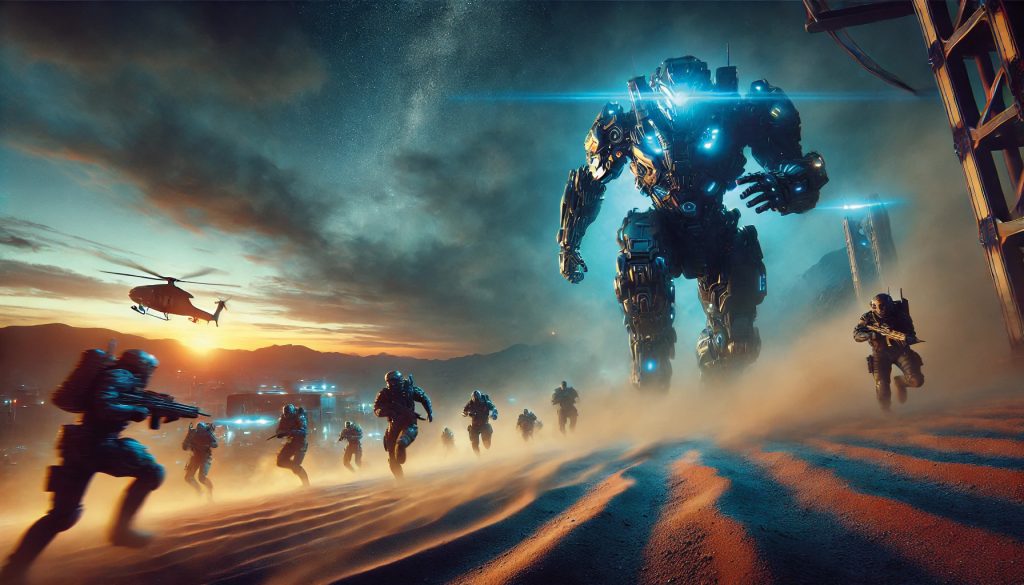
O.G: For centuries, people feared monsters and things they didn’t understand. But following the boom of popular culture, we rebranded monsters and robots as our allies. This might be one of the reasons why humanity is unable to face its true fears. In games, everyone claims they chose the side of the robots or monsters. Perhaps human beings redirect their fear to something else because they are not existentially ready to confront their own nature.
C.Ö: You’ve summarized the narrative I’ve been trying to convey for the last hour so simply and elegantly. Of course, we should also note that there are still plenty of things to be feared about artificial intelligence itself.
Sedat Erol: In some fields, A.I. models are much more expert, especially when it comes to data analysis. While a novice might get a 1x benefit in a specific area, a mid-level professional can scale that benefit to 10x. While being an expert in just one domain was enough in the past, will the future force us to hold expertise in multiple fields?
Ü.A: An author named David Autor wrote a very nice article on this topic in Noema magazine. We always focus on how A.I. will steal all the jobs and cause unemployment. But if you look back, one of the things that hurt society after the Industrial Revolution was elite specialization. Careers like medicine and engineering became elite domains; you had to be either rich or smart to get in. With A.I., these professions will become possible to practice with less education. As a result, the middle class will expand across society. The middle class has shrunk because this elite expertise model brought us to this point. Why do we look at this negatively? Maybe because by spreading elite expertise to the middle class, people could reach better places with less education. I think the most vivid example of this is that most of the education my child or other kids get today is based on language learning. Especially in nonEnglish speaking countries like Türkiye, this is such a huge waste of time. A.I. is about to make language education almost useless.
Apple CEO Tim Cook was speaking to programmers in France. In that conference, he said, “Stop trying to learn English, you don’t need to learn a foreign language at all. Just focus on your software; there won’t be such a thing as a foreign language in the future.” The budgets spent on education in Türkiye are incredible; it means a massive amount of money and time. Maybe better jobs can be done with less education, and this could create positive effects instead of being bad. In the default scenario, A.I. takes over all jobs and people are left unemployed. But in another scenario, with less education, more qualified work can be done. Thanks to this, manual jobs which should actually earn good money but are currently looked down upon could rise. Geoffrey Hinton, called the “godfather of A.I.,” won the Nobel Prize this year. At a panel, they asked him, “What do you recommend to youth?” He said, “I would recommend they become plumbers.” Because those are hands-on jobs requiring manual skills that A.I. cannot easily handle.
“Geoffrey Hinton, called the “godfather of A.I.,” won the Nobel Prize this year. At a panel, they asked him, “What do you recommend to youth?” He said, “I would recommend they become plumbers.” Because those are hands-on jobs requiring manual skills that A.I. cannot easily handle.”
C.Ö: Harari once said, “The best profession in the 21st century is learning.” In an interview where Zuckerberg was asked about Facebook’s developments in artificial intelligence, he said that within a few years, AI will be able to do everything software engineers can do. In other words, he’s implying that a massive portion of the workforce will be laid off.
Ü.A: Consider the profession of plumbing. If a plumber doesn’t come to fix a problem in my home, my house will be flooded with water or sewage. So why is my line of work, writing, looked down on as less prestigious than theirs? Actually, there is a much bigger need for what they do. Right now, maybe these professions will flip completely and we can look at them from a more equal perspective.
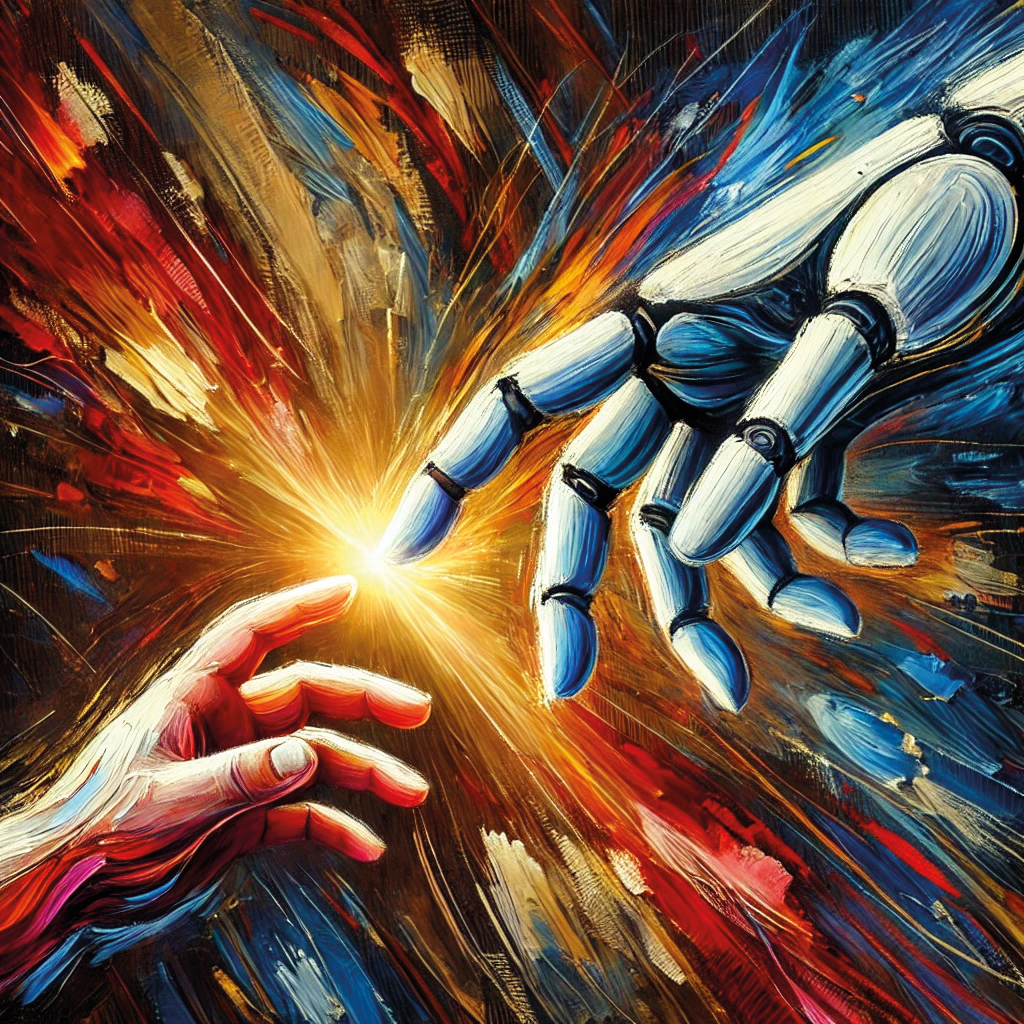 C.Ö: We must not fear artificial intelligence. This is the primary starting point for us and the colleagues we work with. In literary publishing, translators and in media, copywriters, videographers and editors are sharing a similar fear. A.I. will make tasks easier, but these are all just instruments. In the end we are all forced to keep learning; the world is pushing us to this point. I’m not just saying this for laborers or fresh university graduates. It has become a necessity at every stage, title, and position. We reacted to this during the pandemic, being exposed to so many things about being productive instead of sitting idle. This is the world we are going to and we must accept it. Everyone at Socrates Magazine grew up and developed right here. Even for those who started here, their job descriptions from day one compared to today are totally different. Different tasks must be done in different ways, and new things are always entering your life. Don’t let these innovations scare you everything doesn’t just change overnight when you wake up one morning. Let’s say you work as a videographer and a more advanced tool comes out in your line of work. You start using it. Then, advanced A.I. models appear that you can use for social media posts and copywriting. By using them, you start working faster and learning new things. Even if you don’t learn anything, when you look back after a year, you just see how fast life has gone by. There is a danger like that, but I don’t think we should fear it. I am telling this to people who just graduated from university and worry that AI will ruin their careers.
Ü.A: I argue that education will become highly personalized. There is this concept of a curriculum. Especially in high schools, there are millions of kids from different socioeconomic groups with completely different learning speeds. The current curriculum expects all these children to learn the exact same way, making it generalized. What actually matters isn’t the syllabus, but the child’s learning pace, interests and socioeconomic conditions. I believe children can be educated much better through A.I. In this system, educators and teachers will shift to a guiding role; they will need to show how to reach information through different paths. Personalized education is crucial. The point is to specialize in certain areas and add your own touch. The result will be better because you are showcasing your own style. When everyone became able to do everything, we all leveled out at a certain mediocrity. The style of my own writing has also changed in the age of A.I. Now I tell more personalized stories, often starting with anecdotes that seem totally unrelated to the topic. Then, I connect it to the right information. There is no point in just giving correct facts anymore information is accessible to everyone. I practice my craft as a writer by making that information easier for people to internalize. These elements of personalization at the beginning and end make the topic fun and understandable. It creates a piece of work that highlights the human factor something A.I. simply cannot do. I recently wrote an article about the Beta generation.
“We shouldn’t be completely hopeless. The history of the reality that everyone agrees on is only 150 years old or so. When the French Revolution took place, nobody in a town thirty kilometers away was aware of it. This instant awareness is something that came with modern communication and technology.”
U.Y: By the way, I’m curious to know what you think about the generations.
Ü.A: We shouldn’t be completely hopeless. The history of the reality that everyone agrees on is only 150 years old or so. When the French Revolution took place, nobody in a town thirty kilometers away was aware of it. This instant awareness is something that came with modern communication and technology. It used to spread slowly, and we should go back to that same slowness. Leaving a note in history is precious. We know that the Criminal Court telling Netanyahu “You are guilty” will change nothing. A symbolic court was set up in Istanbul during the Second Gulf War, but it was of no use to anyone. In the Nazi era, Sophie Scholl saying her words of defiance and being executed two days later achieved nothing practically. Beyond winning, maybe this story should be about making a record.
C.Ö: Will something like this really happen? Will the dream of a generation that sees things from a human perspective come true? It’s highly unlikely.
U.Y: I want to move toward the legal side of things. You have this concept called the “Supranational Artificial Intelligence Regulatory Committee.” You even discussed it in Cumhuriyet [Editor’s Note: One of Türkiye’s most deeply rooted and influential secular-mainstream newspapers] but in your opinion, is it really possible to implement effective regulations through a global body like that?
Ü.A: It really operates like a regulatory institution. Whenever a new technology or innovation has arrived throughout history, chaos has always followed. When gramophones and musicplaying devices were invented, instrument shops thought, “From now on, nobody will buy instruments because everyone will have a gramophone at home. What is the point of an instrument?” But the love for music grew, and musicians complained, “No one will come to concerts anymore how will we earn money?” That’s when record technology came out; they sold vinyls and made a living.
The same exact thing happened with MP3s. In the early 2000s, everyone said the music business was dead. When the legendary Ferdi Tayfur passed away recently, it was reported that he still generated three million liras in monthly digital royalties. With enough patience, things stabilize, and this rules for A.I. too. We did an episode called “A.I. and Law” on Yeni Medya 451. We examined many lawsuits involving A.I. there. It was very exciting to research. Soon, we will have the right to appeal many choices made by A.I. People aren’t rejecting our credit loans anymore; a computer, an A.I. tool inside the banking network is making that choice. So who are we going to sue? We will have to sue the A.I. There are many court cases about this in the US. In parole decisions, A.I. can show bias based on race. These things will keep happening fi rst comes chaos, then discussions. After discussions come regulation and normalization. Then a new innovation, and a new chaos.
“ I believe children can be educated much better through A.I.”
U.Y: I want to turn to the issue of copyright. The struggles faced by cartoon magazines were caused by the free circulation of cartoons. These pieces of work are just so easy to share on social media channels.
C.Ö: These problems will be solved. A landmark class-action lawsuit is going on in the US right now. This kind of lawsuit affects a huge number of people because you sue on behalf of all victims at once, meaning if you win, everyone gets a piece of the compensation. There is a huge lawsuit against Stable Diffusion today. Since images were scraped from the web and integrated into their model, it was filed for all the copyright owners. The result of this case will be very decisive.
It all comes down to the concept of “fair use” people are arguing whether this counts as fair use or not. The founders of Stable Diffusion and Midjourney say, “What art piece can exist without any inspiration or foundation?” On the other hand, we see that the copied training images actually reappear in the A.I.’s own creations. For example, because it trained on photos with the Getty Images watermark, the Getty Images logo shows up on the right or left of some generated pictures. Because of this, Getty Images is also in the lawsuit. This case will prove if the world is ruled by a side that cares about democracy. If Stable Diffusion and Midjourney lose, A.I. systems will have to pay royalties for all the training data they pull from the internet. This will only be valid in the western world and it won’t stop China. So, A.I. companies will have to pay for all internet content and buy copyrights. This is a very fair and well-deserved situation. You cannot just use people’s pictures randomly, build a system, and make a fortune. But at the same time, we will see countries outside of copyright treaties developing their own networks, gathering massive data, and leading the AI field. The same rule applies to AI used in weapons, war, and every other area. We face a huge dilemma. If we are afraid of China ruling the world and us, it looks like we might have to sacrifice democracy.
U.Y: It was a valuable conversation where we discussed both new media and society, and A.I. and humans in depth. Thank you very much for taking the time to join us and for contributing to our special feature. We’re so glad you accepted our invitation and joined us today.
Can Öz & Ümit Alan: It’s a beautifully fitting end to a show where, honestly, all the questions were asked by men and all the answers were given by men! You’ve asked some truly brilliant questions, so thank you so much. (Laughs)
Son İçerikler