Critiquing the Critics of Techno-Feudalism: Calling off Capitalism’s Funeral

İbrahim Berkan Karataş, Sociologist, explores the evolution of capitalism into cloud capitalism, the workings of algorithmic forgetting, the dynamics of the rentier economy, Byung-Chul Han’s psychopolitics, and how the digital age has reshaped our daily memories. Inspired by the call to overcome left-wing melancholia and to see the cloud as a shared resource, this insightful discussion features İbrahim Berkan Karataş analyzing the systemic changes brought by techno-feudalism to contemporary society.
Sıla Gündüz: Hello, and welcome. Could you introduce yourself?
İbrahim Berkan Karataş: Thank you for the invitation. I am a PhD candidate in sociology at Marmara University and currently finishing an advanced master’s in Digital Humanities at KU Leuven, though the disciplinary labels matter to me less than the seam where they join: the seam between the empirical study of data and digital systems and a critical theory of the present. What brought me here is a kind of stubbornness, a refusal to grant that anything in the social world is ever merely technical. Behind every interface there is a question of property, of who owns the infrastructure through which we now think, remember, labor, numbers, and speak to one another, and who is made to pay rent for the privilege; behind every promise of convenience there is a question of power, of how domination has learned to present itself as a gift one would be foolish to decline. I try to read data and digital systems against the grain, as sedimented social relations and never neutral givens, and I am drawn above all to the points where the conceptual and the material refuse to come apart, where a single design decision turns out to be a tacit argument about how a person ought to live, or where the vocabulary of innovation dresses up a very old story of dispossession and ownership.
Mustafa Burak Avcı: “Techno-Feudalism” is now widely discussed in academia and in everyday conversation, and we chose it for our magazine’s theme. Before we begin, how does Yanis Varoufakis’s idea of techno-feudalism help us understand the world conceptually? What are your views on it?
İ.B.K: Let me begin by granting Varoufakis his due, because the diagnostic achievement of Techno-feudalism is real and should not be dismissed directly. His central claim is that capital has mutated into what he names cloud capital. This mutation has evicted capitalism’s two organizing principles, markets and profits, from the centre of the system and pushed them to its margins; in their place stand digital platforms that look like markets yet operate as fiefdoms, and a return of rent, specifically the cloud rent that must be paid for access to those platforms. The conceptual gift here is that the argument makes visible something the more cautious vocabularies leave implicit: the personal, quasi-extraeconomic character of the dependence we now live inside. When the App Store levies its thirty per cent, Varoufakis is right to hear in it the cadence of ground rent and not the cadence of competitive profit; when he describes us as cloud serfs producing, for free and outside any labor market, the content and data that valorize the platform, he has named a genuine novelty in the circuit of accumulation.
My reservations begin precisely where his periodization begins. To call this the death of capitalism, to posit rent against profit as the sign of a new mode of production, is, by the measure of Marx’s own categories, a category error, and here Evgeny Morozov’s “Critique of Techno-Feudal Reason” lands its strongest blow. For Marx, feudalism names a mode of production defi ned by a specific mechanism of surplus appropriation; rent, in the third volume of Capital, is not the opposite of profit but one of the forms in which surplus value is distributed among the propertied classes, a point Ernest Mandel extended with his analysis of technological rents as surplus profits internal to capitalist competition. If rent has always been a modality of surplus-value capture, then its return to prominence signals capital’s reorganization, and not its supersession. I find Cédric Durand’s account more rigorous on exactly this terrain: in How Silicon Valley Unleashed Techno-Feudalism he grounds the phenomenon in the political economy of intangible assets and intellectual monopoly, arguing that capital has tilted from production toward predation, that the digital boom fuels a rentier economy because the control of information has become the most powerful means of capturing value. That formulation keeps us inside a recognizably capitalist logic even as it registers the feudal coloration of dependence and personal domination. so my stance is straightforward: techno-feudalism is indispensable as diagnosis and contestable as periodization; I keep the cloud capital, I keep the cloud rent, and I let go of the funeral for capitalism.
Berra Çalışkan: The techno-feudalism framework is approaced from various angles, often shaped by political agendas. Some see a new structural crisis or a distinct phase of capitalism; others believe it will alter social relations, change capitalism’s stages, and introduce a new mode of production. What is your perspective, and how do these debates, in both realpolitik and academic circles, affect the phenomenon itself?
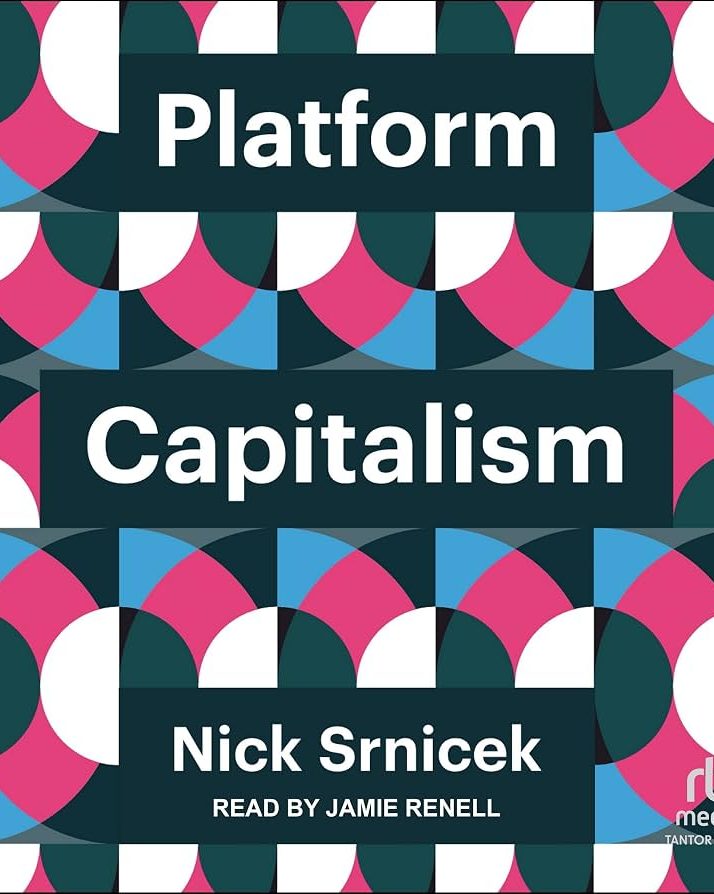
İ.B.K: The disagreement you describe is, at bottom, an argument about periodization, and I fi nd it clarifying to hear three distinct answers folded inside it. One answer says we have genuinely crossed a threshold into a new mode of production; this is Varoufakis at his boldest in his 2023 book Techno-feudalism: What Killed Capitalism?, and parts of Cédric Durand’s How Silicon Valley Unleashed Techno-Feudalism can be read in the same key. A second answer keeps us fi rmly inside capitalism and treats what we are living through as a new phase or regime of accumulation built around platforms and rent; this is the terrain mapped by Nick Srnicek in Platform Capitalism and by Brett Christophers in Rentier Capitalism, and it hardens into an open refusal of the feudal vocabulary in papers like Nick Gane’s “Capitalism Is Capitalism, Not Technofeudalism” and Jeremy Gilbert’s “Techno-Feudalism or Platform Capitalism? Conceptualising the Digital Society” the latter weighing the two labels against each other and settling on platform capitalism.
“If the left declares capitalism dead, it risks abandoning its most original and effective weapon, the anti-capitalist political-theoretical apparatus built around the wage relation and surplus value, and chasing the shadow of a ‘New Middle Ages’ that the right can colonize just as easily.”
The third answer is more cautious than the other two, and it is the one I find most honest: it speaks of homology and not identity, conceding that the present rhymes with feudalism without having become it. Robert Brenner gives this its sharpest expression in his essay “Escalating Plunder” where he reads the post-crisis bailouts as “predation as a precondition for production,” an upward redistribution of wealth carried out by directly political means; the symptoms recall the feudal past, prolonged stagnation, a parasitic elite fattened by the state, the immiseration of the many, and yet, on his account, capitalism still very much rules the day.
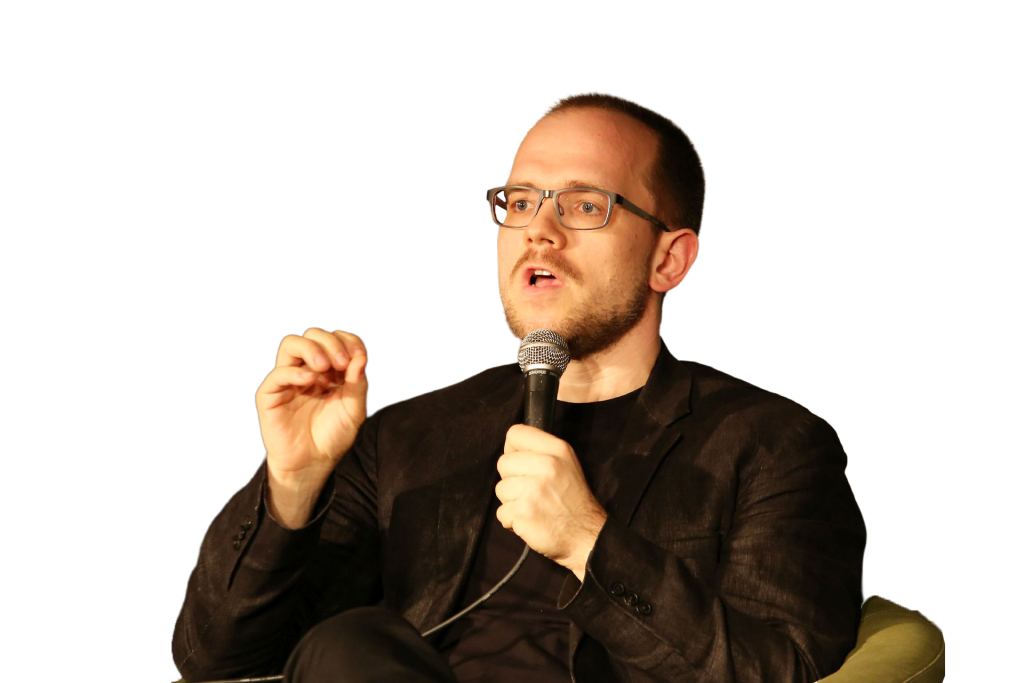
Evgeny Morozov
Even Evgeny Morozov, otherwise merciless toward this feudal-speak in his paper “Critique of Techno-Feudal Reason,” registers this Brennerian instinct as the defensible core of the whole quarrel. I situate myself between the second and third positions: what lies before us is a mutation of capitalism around intangible assets, intellectual monopoly, and rent, and not the arrival of a successor system. Now, to your sharper question about the effect of these debates on the phenomenon itself. The label is never innocent, and this is where the realpolitik enters the picture. Morozov’s political worry deserves to be taken seriously: if the left declares capitalism dead, it risks abandoning its most original and effective weapon, the anti-capitalist political-theoretical apparatus built around the wage relation and surplus value, and chasing the shadow of a “New Middle Ages” that the right can colonize just as easily. Against this, Jodi Dean offers the most generous defence of the feudal vocabulary in her essay “Same As It Ever Was?” and in her work on neofeudalism and communicative capitalism; her point is that the non-capitalist dimensions of the relation, expropriation, domination, force, have grown strong enough that the fi ction of free and equal actors meeting in the labor market no longer holds, and the feudal metaphor names that reality of dependence with a clarity the antiseptic term “platform” conceals.
 The debate, in other words, is a strategic battlefield: if the diagnosis is feudalism, the political horizon tilts toward a bourgeois-style revolt against rentiers; if the diagnosis is capitalism in a new key, the horizon stays fixed on the socialization of the means of production, which now means the socialization of cloud capital. I prefer to keep that second horizon in sight.
B.Ç: On Varoufakis specifically, techno-feudalism promises a narrative in which class struggle and social relations are reshaped. How should this mechanism be interpreted? When economic actors deploy both political and economic pressure, what is the appropriate way to interpret “digital serfdom,” and how would you approach analyzing this problem?
İ.B.K: The interpretive key is Varoufakis’s own distinction between the cloud prole and the cloud serf, and I would read it alongside Tiziana Terranova’s older but prescient concept of free labor and Nick Couldry and Ulises Mejias’s notion of data colonialism. The cloud prole is the waged worker driven to physical limits by cloud-based algorithms, the Amazon picker whose tempo is dictated by a non-corporeal entity incapable of empathy; here, as Varoufakis honestly concedes, almost nothing is new that Marx had not analyzed in his chapter on piece-wages.
“The cloud prole is the waged worker driven to physical limits by cloud-based algorithms, the Amazon picker whose tempo is dictated by a non-corporeal entity incapable of empathy; here, as Varoufakis honestly concedes, almost nothing is new that Marx had not analyzed in his chapter on piece-wages”.
The cloud serf is the rest of us, producing, outside any labor market and without a wage, the behavioral raw material that the platform then valorizes. The mechanism that reshapes class struggle is the fusion you highlight: economic coercion (the rent extracted from vassal capitalists, the thirty per cent) is welded to extra-economic coercion (the capture of attention, the corvée of unpaid content), so that the site of extraction migrates from the wage relation alone to the totality of social life rendered as data.
My analytical approach refuses to let this dissolve the proletariat into a metaphor. The serf and the prole are both inside surplus-value relations, even if at different moments of the circuit; Couldry and Mejias are useful precisely because they insist that data colonialism appropriates life as raw material whether or not it takes the form of labor, which keeps the question of value open without abandoning it. So I would interpret digital serfdom as predation, in Durand’s sense, layered onto exploitation, and not substituted for it.
The error to avoid is the seduction of the feudal image, which can tempt us into thinking that because the user is not waged, the user stands outside capital (a move reminiscent of Fredric Jameson’s theoretical intervention vis-à-vis Jean Baudrillard in Postmodernism, or, The Cultural Logic of Late Capitalism: what appears to have escaped capitalism must instead be re-situated within capitalism’s own logic); the user stands at a newly opened frontier of capital, one that Marx’s category of primitive or ongoing accumulation, the enclosure of a commons, illuminates far better than any nostalgia for the manor.
Sıla Gündüz: How does this transformation permeate everyday life? Do the economic mechanisms of technofeudalism lead to a shift in how the average person thinks? Could daily life be re-produced in a completely different way through the tools of this transformation?
İ.B.K: This is, in fact, the question that my own empirically grounded research seeks to answer. In “Three Modalities of Algorithmic Forgetting” I argue that the transformation reaches everyday cognition through the infrastructures of memory, and that it does so not through spectacular surveillance but through banal, OS-level features marketed as convenience. I trace three modalities.
Microsoft Recall enacts over-capture: by screenshotting everything, it saturates the record until events drain of meaning, and forgetting is displaced into a private chore of filtering and self-management. Google Ask Photos enacts curated retrieval: it selects and omits by opaque criteria, so that traces remain stored yet, when not surfaced, slip out of practical reach, a condition I describe, following the erasure-studies vocabulary, as a form of operative erasure. Apple Journal enacts preemptive guidance: its prompts steer inscription toward gratitude and the wholesome before the record is even formed, which is forgetting at the point of writing.
 The cumulative effect answers your question about how the average person thinks. We are moved from narrative memory, in Paul Ricoeur’s sense, toward what I call query memory: get the fact, retrieve the photo, move on, with the unexpected and the antagonistic unwittingly de-ranked. Bernard Stiegler would call this a transformation of our tertiary retention, the externalized supports of thought; Lauren Berlant’s cruel optimism and Eva Illouz’s emotional capitalism name the affective register in which a sanitized past becomes the condition of remaining functional. The thinking of the average person is thereby narrowed, oriented toward wellness and efficiency, and stripped of the capacity to recognize memory as a field of struggle. As for your final question, whether daily life could be reproduced otherwise, my answer is emphatically yes, and this is the whole political stake of the argument: these are design decisions, and design decisions are contestable. The depoliticization I describe is an effect of engineering, not a law of nature, and what engineering has narrowed, collective action can widen again.
“Han’s psychopolitics, for all its diagnostic acuity, carries limited empirical scope; his achievement subject tends to reflect the pathologies of an elite Western academic milieu more faithfully than it captures the lived conditions of globally precarious populations, and his sweeping declarations (‘the Other is completely expelled,’ ‘society is completely transparent’) trade nuance for emphasis.”
S.G: How accurate is it to interpret today through Byung- Chul Han’s perspective? Can the transformation of social relations, techno-feudalism, and psychopolitics together form a correct conceptual framework? Can these two frameworks generate a chemistry between them?
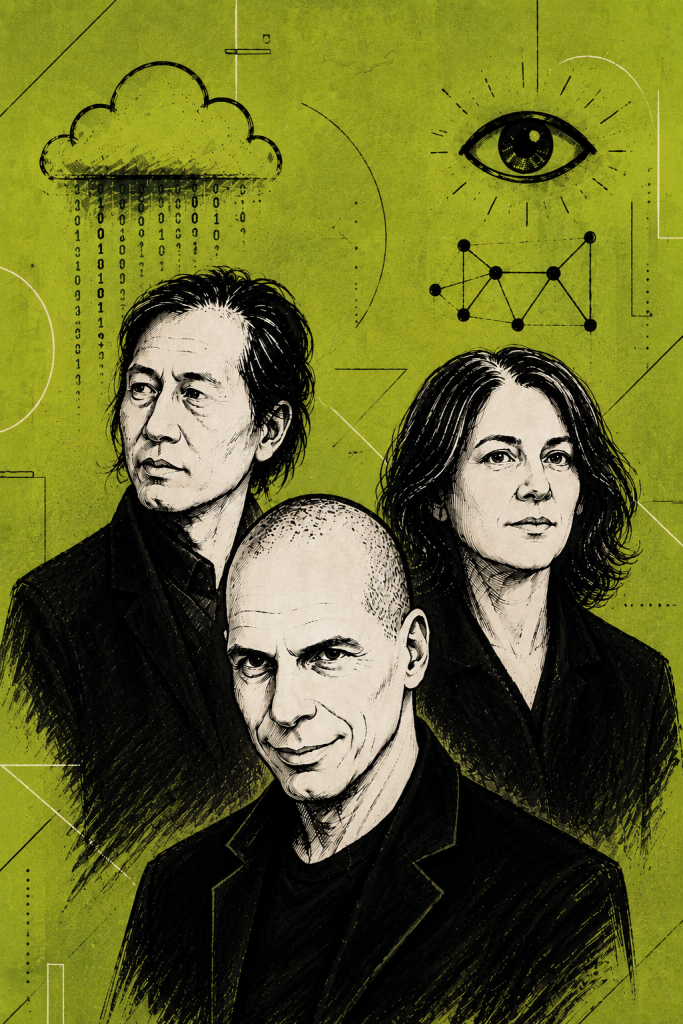
İ.B.K: There is a real chemistry, and it is worth stating with precision before I qualify it. Varoufakis and Durand supply the objective structure, cloud capital, intellectual monopoly, the rentier economy; Han supplies the subjective form, the achievement subject who exploits itself in the name of freedom, the society of positivity that expels all negativity, the transparency that becomes domination. These are two faces of one process, and read together they describe both the cell and the prisoner who has learned to love it. Varoufakis even reaches Han’s terrain in his own idiom when he writes, in the chapter on the death of the liberal individual, that techno-feudalism has produced persons who are possessed and not possessive, persons whose focus has been stolen; that sentence could sit unaltered within psychopolitics.
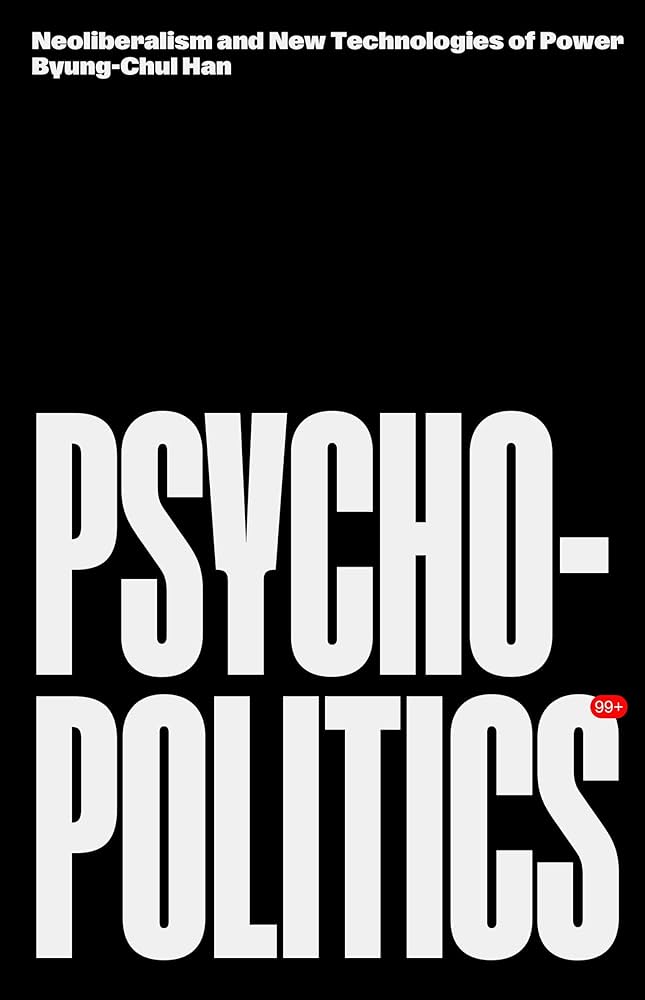
This chemistry holds true only under one condition—a condition that forms the central claim of my Constellations paper (see “Toward a Critique of Critique: Paradoxes of ByungChul Han and the Dialectic of Despair and Possibility”). Han’s psychopolitics, for all its diagnostic acuity, carries limited empirical scope; his achievement subject tends to reflect the pathologies of an elite Western academic milieu more faithfully than it captures the lived conditions of globally precarious populations, and his sweeping declarations (“the Other is completely expelled,” “society is completely transparent”) trade nuance for emphasis. So the synthesis becomes a correct framework only if Han’s subject is re-grounded twice over: re-grounded in political economy, so that the self-exploiting subject is understood as the correlate of the rentier structure and not a free-floating mood, and re-grounded empirically, in the actual infrastructures, the Recalls and Journals, through which psychopolitics is materially enacted. Absent that double grounding, the marriage of techno-feudalism and psychopolitics produces a beautiful elegy and very little analysis.
Elif Başlantı: How does psychopolitics find its place within this transformation? Could it be a structural result of the techno-feudals, whether precariats or cloud proliferating developing since the 2008 crisis? What is the relationship between the self-exploiting person and both technofeudalism and the rentier economy?
İ.B.K: You have named the chronological hinge correctly, and it lets me make my central theoretical move. Han insists on a sharp distinction between prohibition and compulsion, and he refuses to call self-exploitation a form of internalization, reserving that word narrowly for the absorption of negative constraints. I argue the reverse. If we shift attention from the source of compulsion to its function, neoliberal subjectivation reveals itself as a positive internalization, an affective self-binding, together drawing on the adjacent frameworks of Lauren Berlant and Nikolas Rose, in which subjection is lived as autonomy and domination is sustained through the very desire to optimize oneself. The subject internalizes not a “no,” but an affirmative injunction to thrive, and that is what makes the regime so resistant to the older grammar of resistance. Now place this against 2008, exactly as you suggest.
Varoufakis’s account of the post-crisis settlement, socialism for the financiers, austerity for everyone else, an investment strike, permanent stagnation, asset inflation, produced two things at once: the rentier structure of cloud capital, funded by the central banks’ money, and the precarious subject who must curate the self as a brand to survive a world that offers no fenced-off refuge from the market.
Psychopolitics is therefore the structural correlate of the rentier economy and not a parallel cultural symptom. The cloud serf who self-optimizes is producing the behavioural surplus, in Shoshana Zuboff’s term, most fully developed in The Age of Surveillance Capitalism: The Fight for a Human Future at the New Frontier of Power, that the cloudalist captures as rent. The self-exploiting person and the rentier are the two ends of a single relation: one labors without a wage and experiences it as self-realization, the other collects the rent and calls it a platform.
“As David Harvey argues in The Enigma of Capital and the Crises of Capitalism, the bailout transmuted catastrophe into upward redistribution, and the platform now transmutes the user’s every lapse, every search, every idle scroll, into rent.”
B.Ç: The new rentier economy has turned economic failures directly into instruments of power. Where does the obligation to pay rent on platforms, without owning any means of production, position itself within Byung-Chul Han’s established relationship of power and divinity?
İ.B.K: Han’s theory of power is most acute where it observes that power, at its most effective, does not coerce against a will but acts through it, smoothing and not breaking, operating through permission and seduction; the “free” power he describes governs by saying yes, by enabling, by occupying the place of the unconditioned. The platform rent you describe is the exact realization of this.
The user pays in attention and data, owns none of the means of production, and experiences the arrangement as gift and as freedom, never as extortion; one is granted access, and the granting feels like grace. This is why the theological register you invoke is apt and not merely ornamental. The platform sits in the position of the divine in a precise structural sense: it is the unconditioned condition of participation, it cannot be petitioned or appealed to, and when it casts you out, as Varoufakis observes of the worker fired by an algorithm, you fall into a Kafkaesque spiral in which there is no human face behind the verdict.
I feel Jodi Dean’s communicative capitalism provides us with a political reading: circulation itself becomes the trap, since our contributions are captured as so much undifferentiated flow whose very abundance forecloses political efficacy. And the conversion of failure into power that you name is, for me, the most damning continuity with 2008: As David Harvey argues in The Enigma of Capital and the Crises of Capitalism, the bailout transmuted catastrophe into upward redistribution, and the platform now transmutes the user’s every lapse, every search, every idle scroll, into rent. Han gives us the phenomenology of why this feels like devotion; Varoufakis and Dean give us the structure of why it functions as extraction. Both are needed, and neither suffices alone.
S.G: According to Han, we are in a transformation where we voluntarily share data and collaborate with algorithms out of a desire for exposure. In this environment of voluntary disclosure, how are platforms transforming individual self-presentation; can we truly say our participation in daily and social life is “free”? Where does the society of positivity stand in this situation?
İ.B.K: Self-presentation is now governed by a double bind that Varoufakis describes with great economy: the young person is taught to treat the self as a brand and, at the same time, to be judged on the perceived authenticity of that brand, so that every post becomes a calculation about which of one’s possible “true selves” the average online opinion will reward. The word “free” fails in both of its senses, and the failure is instructive. Our participation is free of charge, and yet it is paid for in the free labor that Terranova theorized, the unwaged production of the very content that constitutes the platform’s most valuable stock. And our participation feels free as in autonomous, and yet it is compelled, through the positive internalization I described, so that the compulsion arrives wearing the mask of self-expression.
The society of positivity is the affective regime that makes this unfreedom feel like liberation. Han’s smooth surface, the like, the expulsion of the negative, the dating-app reduction of the Other to a narcissistic mirror, is the cultural form in which the rentier capture of the self is rendered pleasurable. My own work supplies the micro-mechanics: Apple Journal’s gratitude prompts are positivity at the level of the inscription itself, steering the diary toward the sunset and the workout and away from the argument with the boss or the protest one attended. What I add to Han, and what I think a critical reading has to add, is that positivity is not merely a Stimmung; it is a productivity strategy, since the platform’s algorithms optimize for the rents that flow more copiously from contentment and engagement, and, as Varoufakis grimly notes, sometimes from hatred too.
B.Ç: At the breaking point where the individual fully internalizes the system’s failure, can Han’s “voluntary servitude” be organically connected to techno-feudalism’s “digital serfdom”?
İ.B.K: Yes, and the connection is organic and not merely analogical, though I want to mark its knot carefully. The hinge is the old motif of voluntary servitude, La Boétie’s question of why people fight for their subjection as if for their salvation, refracted now through Han and Varoufakis. The cloud serf’s unpaid labor and the achievement subject’s self-exploitation turn out to be the same act under two descriptions: the subject reproduces, for free and with enthusiasm, the cloud capital that dominates it. Han explains the libidinal economy of this, the desire that binds us to the chain; Varoufakis explains the property relation, the brute fact that we do not own the means through which we produce and communicate.
I insist on holding both, because each guards against the characteristic failure of the other. Han alone risks a subjectivism in which everything becomes a matter of affect and the question of ownership evaporates; the chain dissolves into a mood. Varoufakis alone, in his stronger moments, risks an economism in which the subject is merely a function of the rent mechanism. The organic connection is therefore real on one condition: that the libidinal account never be permitted to dissolve the objective property question, and that the property account never be permitted to forget that domination today operates through desire and not against it. Voluntary servitude and digital serfdom are simply the inside and outside of the same wall.
S.G: How should we interpret the relationship between Fast Theory and “story-selling” that you directed at Byung-Chul Han, from the perspective of algorithmic hegemony? Does the algorithmic attention regime not only subjugate the masses but also bend the very critical theory that opposes it to its own logic of circulation?
İ.B.K: This is the reflexive turn of my Constellations paper, and your second question states its thesis more sharply than I did. By Fast Theory, I mean the condition under which critical thought is obliged to conform to the imperatives of immediacy, circulation, and commodification, a condition Hartmut Rosa theorizes as social acceleration and Pierre Bourdieu anticipated in his portrait of the “fast-thinker” who produces marketable concepts on demand. Story-selling is Han’s own term, from The Crisis of Narration, for the packaging of thought into consumable insight, and I turn it back on him with what I hope is fair respect. The paradox is this: Han’s near-annual, swiftly translated output, the more than twenty slim volumes each built around a single evocative concept, enacts the very acceleration he denounces; he risks becoming, in Knepper and Wyllie’s phrase, a “publishing zombie,” and his signature notions, the burnout society, the achievement subject, risk hardening into critical commonplaces drained of analytic precision by sheer repetition.
My translation-velocity data was meant to make this visible, the high-tempo transnational dissemination of a critique of cognitive saturation that becomes entangled in the circuits it indicts. So my answer to your decisive question is yes. The algorithmic attention regime does not only subjugate the masses; it bends the critique that opposes it toward its own circulation logic, and there is no clean outside from which one might escape this. Even radical critique, in order to be seen or heard, must accommodate the tempo it aims to resist; this is the structural dilemma, and I name it, after Heidegger, a kind of Verfallenheit of theory itself. The conclusion I draw is not despair but a task: we need a critical theory of accelerated critique, one that can hold the diagnostic force of a thinker like Han together with a lucid awareness of the conditions of its own production. To refuse that reflexivity is to let the attention economy write our theory for us.
E.B: In your study “Three Modalities of Algorithmic Forgetting,” how does the loading of mental functions onto applications such as Microsoft Recall, Apple Journal, or Google Ask Photos, the delegation of thinking and execution to artificial intelligence, and the complete entrusting of personal data to cloud capital, affect social relations and the fundamental functions of humans at their core? Where does the human-freedom relationship stand in this transformation?
İ.B.K: Three modalities, one political drift, and the drift is depoliticization. Let me state the mechanism in each case, since the differences matter. Over-capture, embodied by Recall, records indiscriminately and thereby saturates and flattens; its forgetting comes from overwhelming volume, and it converts the collective, structural question of surveillance into an individualized technical chore, recasting the subject from a political actor into a personal risk-manager of their own traces, a self-responsibilization in Nikolas Rose’s sense. Curated retrieval, embodied by Ask Photos, naturalizes absence through opaque selection; the trace persists in storage, yet what the system does not surface drops out of practical reach, and because the omission is invisible, it cannot be contested. Preemptive guidance, embodied by Journal, steers inscription toward normative positivity before the record exists, which is Brian Massumi’s logic of preemption applied to memory and Paul Connerton’s prescriptive forgetting enacted in advance. The effect on the fundamental functions you ask about is a narrowing of the mnemonic horizon. We move from narrative memory, which invites interpretation and lets unexpected and antagonistic elements surface, toward query memory, which is instrumental and incurious; memory ceases to be a field of struggle and becomes private mood management, and the political self capable of recalling injustice gives way to a privatized self oriented to wellness and efficiency. This is, at the level of memory, precisely the death of the liberal individual that Varoufakis describes; our focus is not weakened by some failure of will, it is stolen, co-opted by infrastructures that profit from our distraction. As for freedom, I want to end this answer against the grain of my own pessimism, because the empirical record forbids fatalism. These systems fail and are contested: Recall provoked an uproar over its plaintext screenshots and was pulled and re-engineered; Ask Photos was quietly paused because its curation could not reliably surface what users wanted; users revert to classic search, refuse the prompts, name the overreach. Following Giorgio Agamben’s notion of profanation, the return of system-bound objects to common use, I read these refusals as small but genuine cracks in the edifice. Freedom here is not a possession we have lost; it is a practice of contestation that remains open.
S.G: Does this psychopolitical passivity in everyday life completely eliminate the possibility of a structural social transformation? Is politics nowadays only reproducing itself in a way that feeds the attention economy? How do you see Byung-Chul Han’s critique here? Could the end of political solutions and promises of democratization be imminent?
İ.B.K: Here I must stage my clearest disagreement with Han, in the spirit of immanent critique and not dismissal. Han’s strong thesis is that burnout and revolution are mutually exclusive, that revolution has become impossible, that no proletarian messiah waits in the wings because the subject is already enmeshed in the systems it might oppose. I read this stance through Enzo Traverso’s diagnosis of left-wing melancholia and Wendy Brown’s “Resisting Left Melancholy: a critique” so lucid that it paralyzes, that comes to reify the very loss it laments, enclosing itself in a hermetically sealed negativity. I refuse the closure on three grounds, each of which I have argued in print. First, the diagnosis has limited empirical scope, modelling the world on a particular elite experience of exhaustion. Second, it ignores the fugitive moments of refusal that the historical record keeps producing, from the Arab Spring to the global climate strikes to encrypted solidarity networks and the ironic subversions of meme cultures, which complicate any purely pessimistic picture of digital life. Third, and most fundamentally, it confuses a genuine difficulty with an ontological impossibility. Is politics today largely captured by the attention economy, reproducing itself as circulation that forecloses action? Yes, and Jodi Dean’s communicative capitalism is the indispensable name for this: the endless contribution of messages that feels like participation and functions as foreclosure. But capture is not abolition, and a relocation of the political is not its end. I do not believe the end of democratization is imminent; I believe its form is being displaced from the institutions we inherited toward arenas we have not yet learned to occupy, and the urgent task is the rebuilding of collective subjects capable of acting at the scale of cloud capital. Han sees the depth of the impasse with rare clarity, and that clarity is a gift; the danger is only that he aestheticizes the impasse into a destiny.

M.B.A: Given that these rent mechanisms and the transformation of social relations lead criticism to become paralyzing, what you have described as a “left-wing melancholia,” where is the way out? What should we focus on to find a solution to the structural crisis caused by this shift?
İ.B.K: Let me answer constructively, because the whole point of my critique of melancholy is to earn the right to a way out. Against the melancholic attachment to a lost world, I would marshal the warmer current of the tradition: Ernst Bloch’s concrete utopia and his “not-yet,” the anticipatory consciousness that finds the seeds of the future in the tendencies of the present; Erik Olin Wright’s real utopias, emancipatory designs tethered to institutional imaginaries of transformation, since, as Wright warns, a critique without such imaginaries becomes a diagnosis without remedy; and Terry Eagleton’s distinction between hope and optimism, his insistence that authentic hope is militant and underpinned by reasons, acknowledging structural intransigence even as it insists on enacting alternatives. I would even read Han’s own late turn generously here: The Spirit of Hope reframes hope as a “waiting without guarantee,” and read against the grain of his fatalism, that posture can be salvaged as a muted form of Bloch’s anticipatory consciousness, an attentiveness to what remains unexhausted.
The focus, concretely, follows from the diagnosis. If the structure is rent and cloud capital, the answer is the socialization and democratic governance of that capital, and here Varoufakis’s constructive program, for all my disagreement with his periodization, deserves to be taken seriously: the reconfiguration of property rights toward one-employee-one-share, the central bank reimagined as a monetary commons with a basic dividend, and above all the termination of the attention model through a Bill of Digital Rights and a micropayment platform that would let us refuse the bargain of free services paid for in unfree labor. To this I would add the living movements that already prefigure it: Trebor Scholz’s platform cooperativism, the construction of data commons against the data colonialism that Couldry and Mejias urge us to resist in Data Grab, and the patient organizing of the cloud serfs and cloud proles who, contrary to Han, have not vanished as political subjects. The one path I would foreclose is Varoufakis’s occasional drift, shared with Han’s later work, toward a fatalistic hope that excess will undo the system from within, a waiting for collapse that is not the same as organizing liberation. The task, I believe, is to carry his incisive negativity together with a renewed and militant imagination, so that critique becomes the negative ground from which a reasoned hope can grow, and not the elegy that mourns the future before it has been fought for.
S.G: Thank you very much for your time. We are extremely grateful for your contributions to our new issue.
İ.B.K: The pleasure was mine. As I take leave, I would like to tell your readers that diagnosis is the easy part. The real task is to refuse the melancholy it invites and turn the cloud into a commons through reasoned praxis.
Son İçerikler